Blog / Ford

Blog

All Ford Information News Innovation New Vehicles Ford Performance F-150 Service Technology Bronco Awards Mustang Ford EVs F-150 Lightning Features Maverick Ranger Escape History Safety Electric Vehicles Comparisons Expedition Mustang Mach-E Racing Mach-E Raptor Super Duty Deals Explorer Lifestyle Transit Events F-Series Specs Tips Benna Ford Toy Store F-150 Raptor R Mustang GTD Roush Tuscany Used Vehicles BlueCruise Deals Offers and Specials F-150 Tremor FordPass Rewards Formula 1 Mustang GT3 Rousch Shelby Warranties
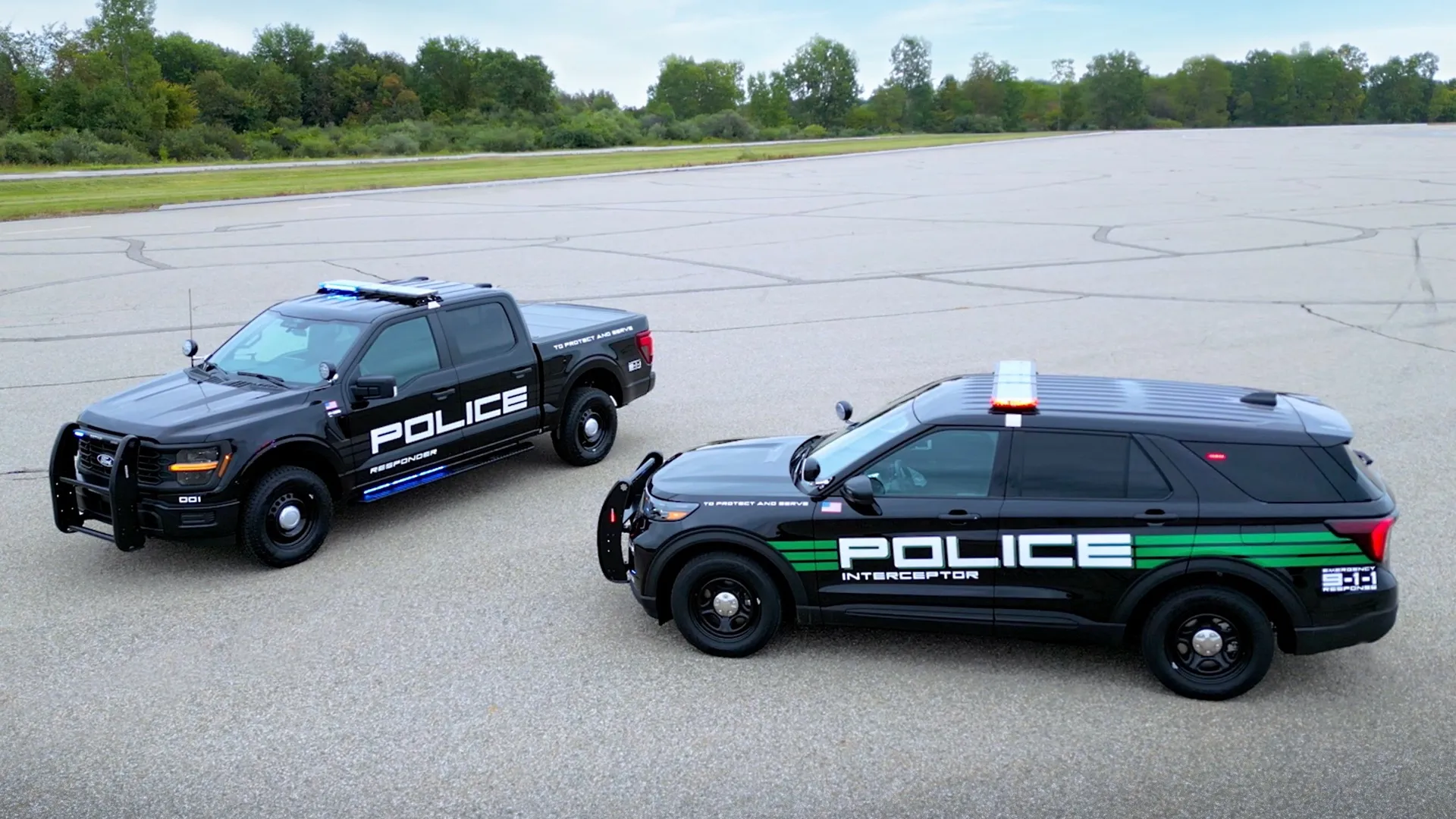
2025 Ford Police Interceptor Utility_2024 F150 Responder_Group_converted

Ford Introduces a New Police Interceptor for 2025

Did you know that the Ford Police Interceptor Utility remains the most popular vehicle for public safety departments across North America? The purpose-built fleet version of the Ford Explorer is a staple of fleets maintained and operated by many Federal, state, county, municipal, and private entities. With the introduction of the updated Explorer, Ford is introducing an upgraded 2025 Police Interceptor Utility that’s reporting for duty soon. Aside from a few updates visually with the new clip and taillights, the Police Interceptor Utility is focused on efficiency from an operational and uptime basis. It is also built to be the safest public safety vehicle on the road. Operationally, there’s the standard hybrid driveline. The hybrid system powers onboard equipment even when the gas engine is off, contributing to a potential savings of up to 838 gallons of fuel per year. This translates to projected cost reductions of approximately $17,500 over a six-year ownership term with gas at $3.50 per gallon from the standard 3.3-liter direct-injected V-6 with the hybrid system. This system offers 318 horsepower and 322 pound-feet of torque with standard all-wheel drive. Governments and fleets can also choose to have their Police Interceptor Utilities powered by either a 3.3-liter V-6 gas engine with 285 horsepower and 260 pound-feet of torque, or a 3.0-liter V6 EcoBoost engine with 400 horsepower and 415 pound-feet of torque. Both of these optional engines have standard all-wheel drive. While performance and efficiency are important, so is safety. The 2025 Police Interceptor Utility was designed and tested to pass Ford’s 75-mph rear-impact crash test. This was a goal by Ford to help keep officers safe out on the highways, earning the vehicle’s pursuit-rated, pursuit-tested distinction. We have seen too many incidents across Minnesota and Wisconsin and hope that we can do something extra to keep our men and women in public safety safer than ever. Towards that goal, the 2025 Ford Police Interceptor Utility comes standard with features designed to help ensure officer safety and productivity. The Police Perimeter Alert system detects moving threats around the vehicle, automatically activating the rear camera, sounding a chime, rolling up windows, and locking the doors, so that officers can monitor their surroundings at different sensitivity levels and complete tasks inside the vehicle. When officers must exit the vehicle quickly, Police Engine Idle lets them lock the vehicle and take the keys while the engine remains running to power the onboard equipment.

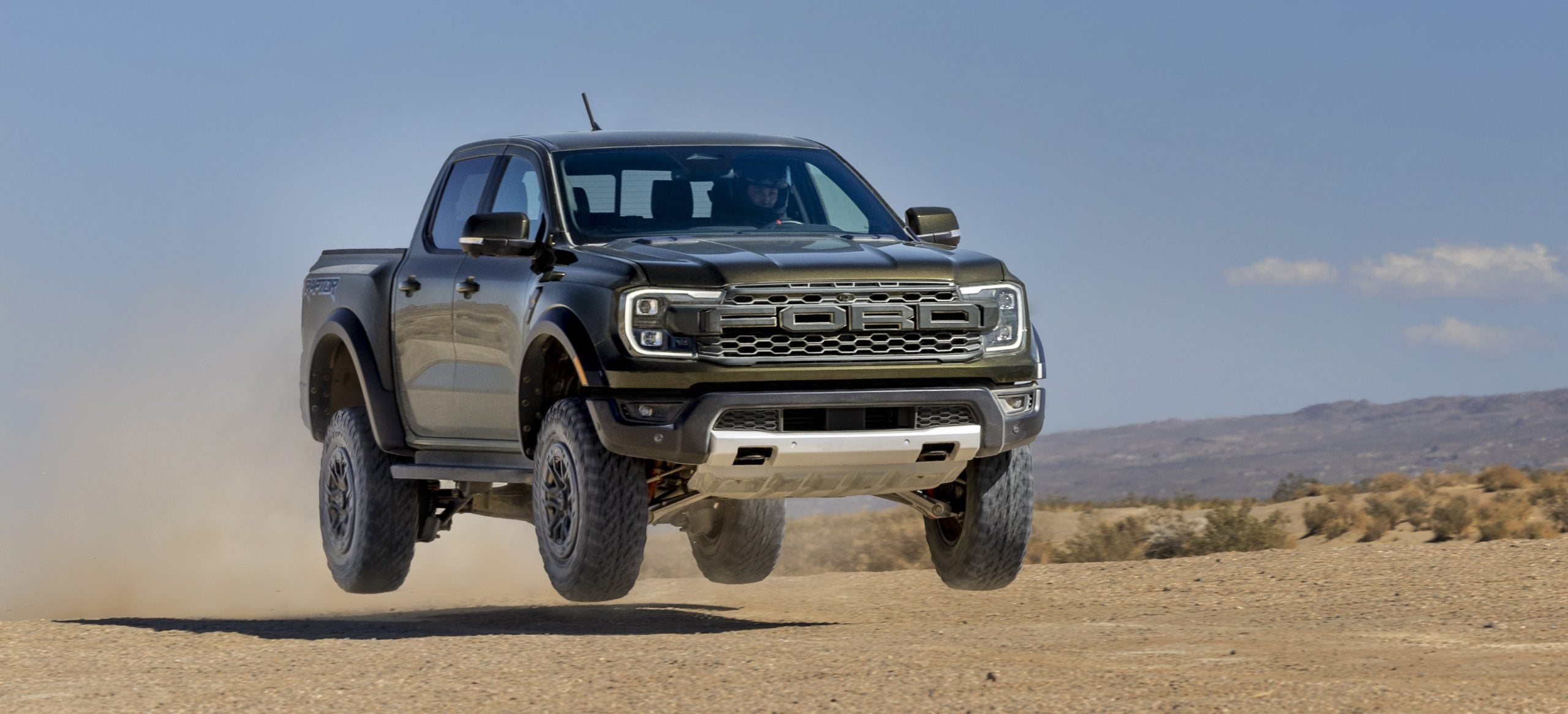
2024 Ford Ranger Raptor

Ford Announces Available Performance Upgrade for Existing Ranger and Bronco Raptors

The Ford Bronco and Ranger Raptors have an enviable reputation as some of the most capable off-road vehicles on the planet that you can still drive home. Ford’s 3.0-liter EcoBoost® V6 powers both models and while the horsepower and torque of either model aren’t exactly lacking, who doesn’t crave more power in vehicles like this? Consequently, Benna Ford is pleased to pass on the news that both models can significantly boost power through a new software calibration from Ford Performance Parts. Available on the 2024 Ranger Raptor and the 2022 – 2024 Bronco Raptor, the power increases are significant, particularly for low-end torque: · Ranger Raptor: Torque increases from 430 to 536 lb.-ft. Horsepower increases from 405 to 455   · Bronco Raptor: Torque increases from 440 to 536 lb.-ft. Horsepower climbs from 418 to 455 The changes significantly improve throttle response, and part of the upgrade includes optimized shift logic to accompany the new power figures. The MSRP for the upgrade is $825, which is a pretty affordable means of that degree of power boost. It can be purchased using Ford Pass Rewards points and installed right here at Benna Ford. Also worth noting is that the calibrations meet Ford durability standards and thus are covered by the vehicle’s three-year, 36,000-mile Ford Performance parts warranty. However, you can get the upgrade for less. The catch is you have to enjoy the heck out of your Ranger or Bronco Raptor at the Raptor Rally, an exclusive one-day event for Raptor owners only near the Ford Performance Racing School in Fairfield, Utah, on Sept. 21, 2024. At the Raptor Rally, you will be able to fly over trails, crawl over rocks, catch air on small hills, test your skill on a Baja-style course, improve your skill with tips from off-road professionals like Vaughn Gitting Jr., Loren Healy, and Chris Voorde. The event is exclusively for Raptor owners and will also include expert workshops, hot lap opportunities, Ford news, exclusive giveaways, meals, and more. All for $500. For Ford Bronco and Ranger Raptor owners, there is an additional incentive: All who attend the rally will receive a 20% off coupon good for the power upgrade as well as other eligible accessories at performanceparts.ford.com. Terms and conditions apply. If you can attend the rally, that would be great! But we understand that not everyone can just take their Raptor 1400 miles to Utah without significant planning. If you are interested in the power upgrade anyway, contact the Benna Ford Service department and discuss it with them.

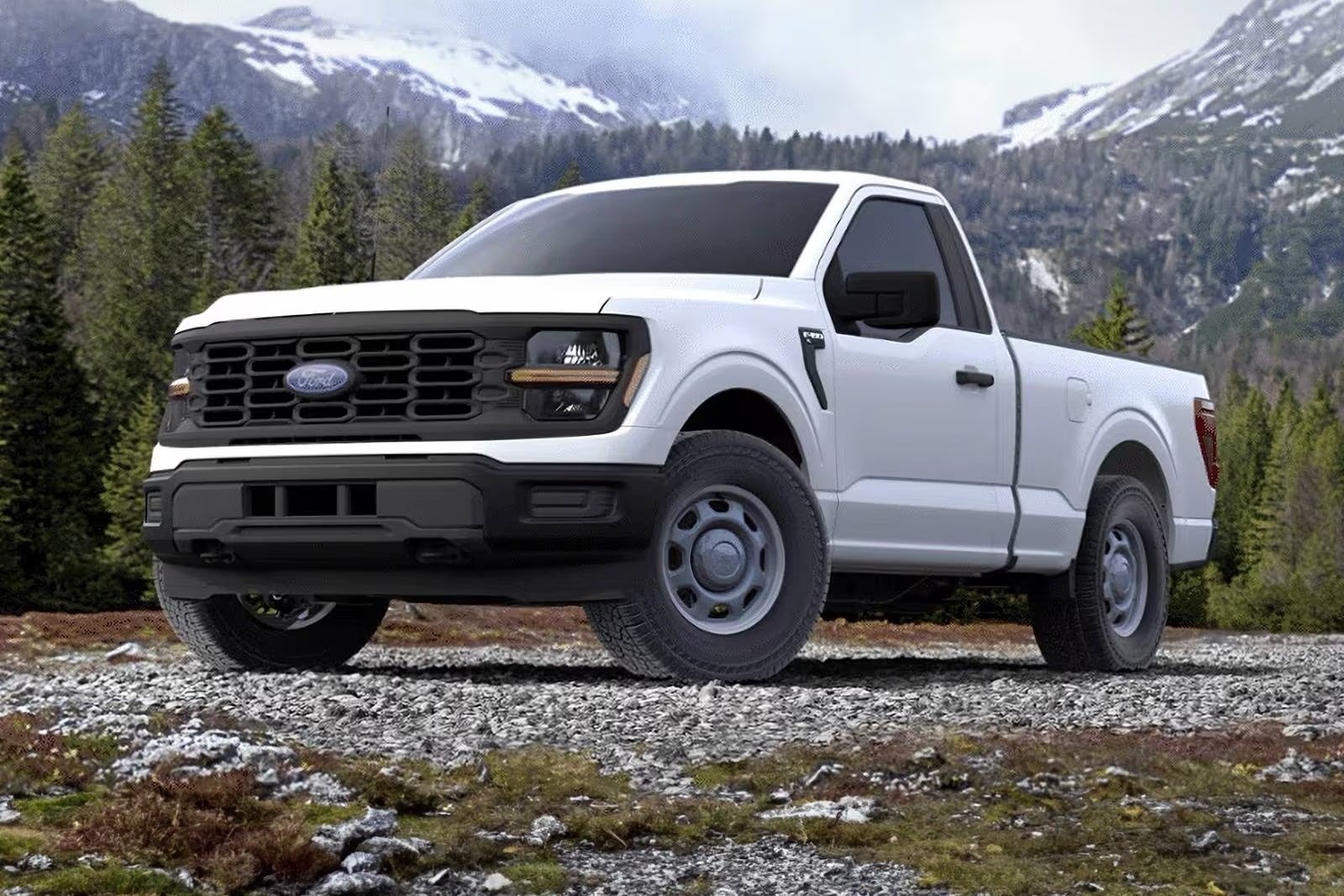
2024 Ford F150 Regular Cab XL Front Side View

Single Cab Battle: Ford F-150 vs. Chevrolet Silverado

It used to be that the most common pickup truck configuration had only two doors and a bench seat. Luckily, they do exist. The Ford F-150 is still available with a regular cab. It can have one with a 6.5-foot or 8-foot box powered by a 5.0-liter V8 or one of two EcoBoost twin-turbocharged V6s. Ford is not alone in making half-ton regular cab pickup trucks. General Motors can also sell you one from either Chevrolet or GMC. The CarBuzz website recently did a comparison between the Ford-F-150 Regular Cab and its GM rivals. What they found out in this comparison was what we knew all along: We can still make a Regular Cab pickup truck that gets down to work. Numbers are part of the equation with the F-150. The maximum towing capacity for a regular cab with an 8-foot box, four-wheel drive, and a 3.5-liter EcoBoost V6 is 11,000 pounds. For payload, a Regular Cab with an 8-foot box in rear-wheel drive and the 3.5-liter EcoBoost V6 engine can carry up to 2,445 pounds. Four-wheel drive models with the same configuration can also haul up to 2,180 pounds. The F-150 Regular Cab is available in the work-ready XL trim. Yet, it is not as “stripped down” as work trucks used to be. For example, a FordPass 5G LTE Modem is available to connect to your home office to receive work orders and transmit sign agreements. Your productivity is enhanced through a 12-inch touchscreen powered by SYNC 4. The expansive camera views can assist in making sure your F-150 is parked right at the job site. Air Conditioning is standard, keeping you cool and warm throughout the year.  As will the standard cloth seats that are split 40/20/40. If it is just you or another coworker, you can fold down the center backrest for a console. Keeping you safe are available Ford Co-Pilot360 2.0 and Ford Co-Pilot360 Assist 2.0 technologies. They are developed to keep you and your F-150 Regular Cab safe and secure from harm. You can also add more to your F-150 XL Regular Cab. There are plenty of Ford Accessories that we can install for you when you purchase your pickup truck, from bed mats to Foldable Box Bed Extenders for better cargo management where it counts. Plus, there are many more to add to your pickup truck. These accessories can also help with your resale value when it comes to trading it in for a new one down the line. If all you need is just a pickup truck without the extra doors, extra seats, and a work ethic to boot, contact us at Benna Ford to see about getting an F-150 Regular Cab XL pickup truck for your work – or even yourself – soon.

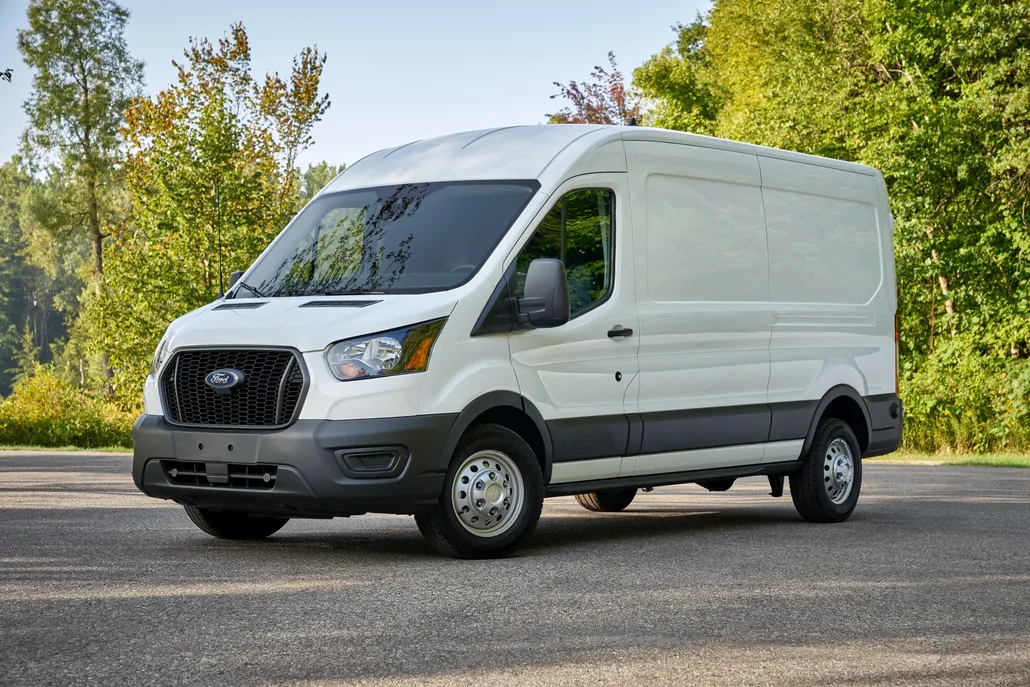
2021-Transit-Driver_converted

Ten Great Things About the Ford Transit

The best-selling commercial van in this country is one that offers a lot more to keep its uptime running toward the bottom line. The 2024 Ford Transit is exactly that van. Why is it the best-selling commercial van in this country? What makes the Transit attractive to both small and large businesses – and even some individuals who simply want a van to do more than haul goods around? A recent article in Kelley Blue Book pointed out ten things that make the Ford Transit the workhorse among vans. Here’s what they cited as their favorite reasons for getting a Transit. Transit comes in multiple configurations, not just for commercial purposes, which include Cutaway and Chassis Cab models. Cargo Vans are available in three roof heights, two wheelbases, and three overall lengths. Plus, there is a Passenger Van version with seating for up to 15 people. In the Passenger Van, you do have a choice of trim levels – XL and XLT -   along with three roof heights, two overall lengths, and one wheelbase. You certainly have a choice to make when it comes to meeting your needs. Did you know you can get a Transit with all-wheel drive? The system works to deliver maximum traction on multiple surfaces, including snow. It is also engineered to not intrude on the standard cargo floor and seat height with no loss in interior volume and space utilization. Transit customers have a choice of two internal combustion engines. A 275-horsepower V6 engine is standard while a 310-hp EcoBoost turbocharged V6 engine is available for bigger jobs. A 10-speed automatic transmission is also standard. In addition to internal combustion engine versions of the Transit, there is the battery-electric E-Transit available. This van is for those who would like an advantage on running costs, especially when the job keeps you within the Twin Ports. On a full battery, the E-Transit has an estimated range of 159 miles. As with all Transits, the E-Transit comes in multiple roof heights and vehicle lengths, along with Cutaway and Chassis Cab models. For better productivity, dual rear doors will open up to a whopping 253 degrees. That makes the job of loading larger items easier into the Transit Cargo Van. Even better with multiple pieces of luggage in the Passenger Van, too! Productivity is also an important part of the Transit when it comes to driver convenience. That is why you can have one with swivel front seats.  This available feature allows the driver and passenger to swivel the front seats for convenient entering or dismounting of the Transit and easy access to the cargo area. Transit vans are far from basic vehicles. Ford adds plenty of features to the cab area to make things easier and more productive. These features include rain-sensing wipers, cruise control, power-adjustable outboard mirrors, air conditioning, remote keyless entry, and more. Not to mention full-screen infotainment systems driven by SYNC and Ford Pro Telematics. Safety and driver assistance are as equally important in a large van as it is in any vehicle. That is why Ford Co-Pilot360 is standard on the Transit. This suite of driver assistance features includes automatic emergency braking, lane-keeping assist, high-beam assist, and a rearview camera with trailer hitch assist. Also available is blind-spot monitoring and a 360-degree surround camera. Through Benna Ford and the Ford Pro commercial vehicle program, you can upfit your Transit with all the organizational tools you need to get the job done. That also includes adding cargo boxes to Cutaway and Chassis Cab models, as well as equipment for mobility transportation. There is one more reason why the Transit is a popular van – it is also available as an overlanding adventure vehicle. The Transit Trail comes directly from the factory to off the grid - deep into woods towards places such as the Boundary Waters. The Transit Trail comes with the EcoBoost V6, all-wheel drive, a 3.5-inch lift, all-terrain tires, swivel seats, a roof vent, skid-plate-style front bumper, wheel-arch cladding, and more. You can configure the Transit Trail with different roof heights, as well. If you think that the Transit is your solution for improved productivity, carrying your large family, or seeking out adventures beyond the Twin Ports, contact us at Benna Ford to connect you with a Transit soon!

2025 Ford Maverick Lobo_02_converted

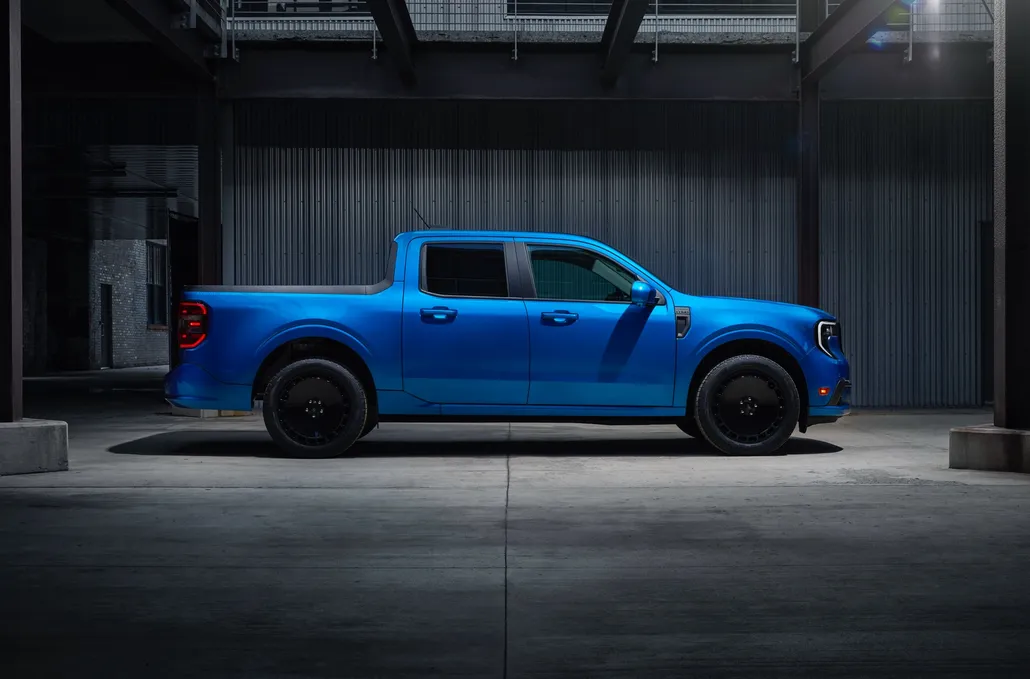
2025 Ford Maverick Lobo Marks The Return of The Street Truck

Back in the day – about 40 years ago - street trucks were the rage. They gave pickup truck owners a way to customize their trucks by adding body kits, fatter tires, and cool color schemes. Some even added more power to their engines – or dropped something that was beyond capacity. The creativity that went into these trucks was off the scale. They were low, but not slow. These were the stuff that dreams were made of. Over the years, Ford had a few “street trucks” that came from the factory. That tradition has been revived with the 2025 Ford Maverick Lobo. Taking our segment-busting compact pickup truck into a cool ride came from the inspiration that some Maverick owners were doing. They transformed their Mavericks into street trucks from scratch. Ford saw what they created and worked on the 2025 Maverick to present something that was factory-made. The 2025 Maverick Lobo starts out as a Tremor with the 2.0-liter EcoBoost driveline with all-wheel drive. From there, they lowered the ride height by a half-inch up front and 1.12 inches at the rear. The result was a roof height that was 0.8 inches lower than a standard Maverick. Next, Ford added on-road tuned suspension and recalibrated the steering. On the driveline, they took a torque-vectoring twin-clutch drive unit from the Bronco Sport to enhance power transfer. The brakes were swapped out for bigger rotors and dual-piston calipers that were originally on the European-market Focus ST. A larger radiator and fan will keep the 2025 Maverick Lobo cool under all conditions. On the electronics side, Ford created a Lobo mode for this performance-oriented 2025 Maverick. When engaged through the drive mode switch, this mode will improve cornering performance, grip, and stability, helping to minimize understeer. However, Ford asks you to not use the Lobo mode on the street – especially around the Twin Ports. If you want to take the 2025 Maverick Lobo onto, say, Brainerd International Raceway for a track day, then flip the switch and see how Lobo mode can change your perception of street trucks. To be a street truck, it must look the part. Ford created alterations to the 2025 Maverick’s revised design by working on aerodynamics with a specific image in mind. That starts with a unique front fascia, painted rear bumper, and rocker moldings. The roof has a contrasting black paint to set off the primary exterior color. A set of 19-inch black aluminum wheels gives it a custom-modified look that finishes the 2025 Maverick Lobo’s aesthetic. Inside the cab, the 2025 Maverick Lobo sets the theme off right. Grabber Blue and Electric Lime accent stitching, along with a graffiti-inspired overprint on the seats give it a look that is inspired by street culture. The Lobo name is also embossed into the black driver and passenger seats. Because street trucks start off with a blank canvas, Ford invites you to make the interior of the 2025 Maverick Lobo your own. There are two themes to choose from: Standard and High. Even though it is a street truck, it is still a 2025 Maverick. You get all of the equipment found on other models, such as a heated steering wheel and seats, Ford Co-Pilot360 2.0 driver-assist technologies, a 360-degree camera, spray-in bedliners, and a moon roof. Yes, you can use the 2025 Maverick Lobo as a tow rig by adding a Pro Trailer Hitch Assist and Pro Trailer Backup Assist after the first of 2025. If you think this is a concept for a street truck, think again. The Lobo will be on sale at Benna Ford along with the rest of the 2025 Maverick lineup. Deliveries will begin in early 2025. Contact us to become one of the first to own this cool truck in the Twin Ports area.

2025 Ford Maverick Lariat with Black Appearance Package in Space White_converted

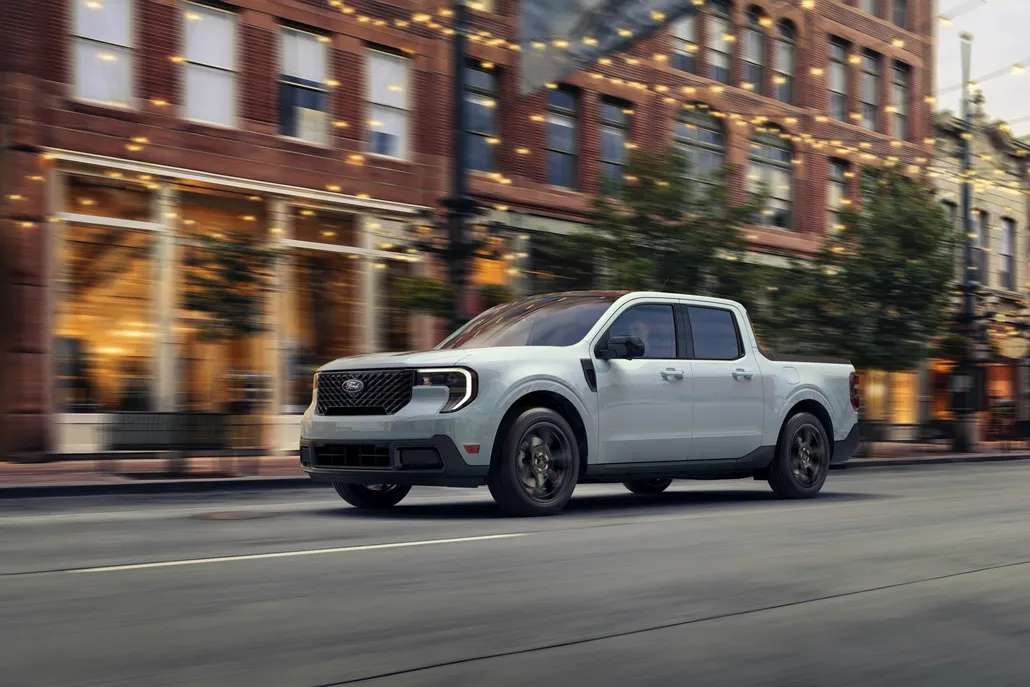
2025 Ford Maverick Hybrid Now Available in AWD

When the Ford Maverick was introduced, everyone celebrated its status as a small pickup truck done right. The design was made to be used as a pickup truck. The bed design was perfect. The size was great for smaller tasks. There was plenty of space inside for people in the cab. It featured a standard hybrid engine that returned up to 40 MPG. The response to the Maverick was unbelievable. People were knocking on our door, asking for one. There was so much demand that Ford tried its best to keep up. Something was missing. Because we live in a climate that needs all the traction to get through our tough winters, drivers needed a Maverick with an efficient hybrid engine and all-wheel drive. Ford is finally giving us what we really want – a Maverick Hybrid with all-wheel drive. It is one of the many things we will get in the 2025 Maverick. Yet, this specific item is important because you can get both engines with all-wheel drive. The hybrid will still be as efficient as it is in the front-drive model. Ford is estimating a target of 40 MPG in the city. Another advantage of the 2025 Maverick Hybrid AWD is increased towing. You can now upgrade to the 4K Tow Package for a maximum rating of 4,000 pounds. That means your Maverick Hybrid can now pull small campers, watercraft, and utility trailers. While we are talking about towing, the 2025 Maverick is now available with Pro Trailer Hitch Assist. Coupled with Pro Trailer Backup Assist, the job of towing has been made easier in the 2025 Maverick. Both features will be available in 2025 on Lariat and Tremor models. While the Hybrid AWD driveline is big news, the 2025 Maverick is getting a facelift and more technology than before. The interior will receive an available 13.2-inch infotainment touchscreen above the center stack. It will now run Ford’s SYNC 4 infotainment system, which will also enable wireless Apple CarPlay and Android Auto. The new screen also houses the new 360-Degree camera, giving you a full view of your surroundings – even when you’re trying to correct your parking. Out back, you can organize your load using the FlexBed system. You can properly place 2x4 boards, and sheets of plywood, divide plants and pavers with pre-set markings and dividers inside the bed. The multi-position tailgate is an added assist when keeping boards and trail bikes in place. If you need to plug in a small tool, a 110-120-volt outlet is available inside the bed. Safety and driver assistance will get a huge upgrade through the Ford Co-Pilot360 technology suite. For 2025, every Maverick is equipped with standard Pre-Collision Assist with Automatic Emergency Braking, Lane-Keeping Aid, a Rear View Camera, and Auto LED High-Beam Headlamps. In addition, Lariat and Tremor will be equipped with Adaptive Cruise Control with Stop-and-Go, Lane Centering, and Predictive Speed Assist. One more thing, the popularity of the Tremor package has been good to the Maverick. So good, that it will become its own trim level on the 2025 Maverick. A great compliment with its revised style outside, including new LED lights and a cleaner grille design. Sounds like the 2025 Maverick just got better. All in bringing customers who want a truck to tool around town and beyond into Northern Minnesota to do everything you always wanted to do in a Maverick. Contact us at Benna Ford is let us know if the 2025 Maverick is the right pickup truck for you.

2023 Ford Super Duty F-250 Tremor Off-Road Package_ F-350 Limited_ F-350 Lariat_ XL STX Appearance Package_converted

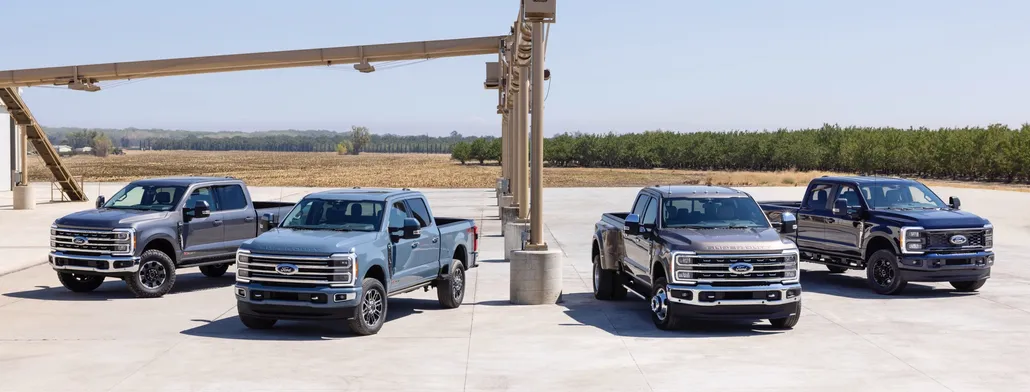
Ford Pro is Helping You to Streamline Fleet Management

No matter how big or small your fleet is, Ford Pro has a solution to streamline its management. It is a series of solutions. They include integrated software that will help you track expenses towards meeting your bottom line, as well as financing management of your fleet. These are just a few solutions Ford Pro offers its customers. To provide an opportunity to invest in your fleet with up-to-date vehicles, Ford Pro offers a Commercial Line of Credit or CLOC. A CLOC is an agreed-upon level of credit, and once approved, fleets can easily add vehicles by applying the total amount financed for each vehicle to the existing balance. Whether you need to add a Maverick or an E-Transit to your fleet, Ford Pro’s CLOC can work with you to meet your needs within the balance of your account. To make sure your fleet is running and meeting the bottom line, Ford Pro offers a suite of solutions where fleets can simplify processes, increase uptime, and gain a comprehensive view of their total cost of ownership. It is called Ford Pro Intelligence. Part of this suite is the Ford Pro Fleet Management Software. This important electronic tool captures cost-related data, vehicle maintenance history, activity, and more in a convenient on-screen dashboard. From the software, you can create and assign work orders—and then track those work orders from start to finish. This software is also connected to your entire fleet. Ford Pro vehicles are equipped with an onboard modem to connect with the Ford Pro Intelligence software, which tracks maintenance and energy usage while potentially lowering your cost of ownership. For example, you can receive vehicle and charger alerts to stay on top of proactive maintenance. You can also schedule service directly within the software so you can keep your fleet on the road and on the job. Ford Pro also has an easy-to-read display that provides insights on your vehicles, chargers, and daily fleet activities all in one system. Another key software solution for your fleet is Ford Pro Telematics. This can provide a real-time window into your fleet and help optimize your business. Ford Pro Telematics can monitor vehicles and evaluate driver performance with live GPS. It can also analyze fuel consumption, EV range, idling time, and more. You can add dashcams to your fleet and have them feed video data into Ford Pro Telematics. Feedback from the dashcams can provide insights to help protect against false claims and help boost productivity by monitoring driver performance, such as speeding, harsh braking, and distracted driving. This can assist fleet managers in helping their drivers make needed adjustments. Ford Pro Telematics is available through a subscription. This subscription includes In-Vehicle Coaching, an audible alert system that monitors driver behavior in real time. Once you’ve enrolled eligible vehicles, you can customize driver parameters, such as speeding threshold, idling duration, acceleration sensitivity, etc. All of these pieces together can help you grow and update your fleet, keep up with maintenance, and improve your productivity and uptime. Benna Ford can work with you to help add this layer of management to your fleet while keeping you informed of new opportunities for your business and your fleet. Contact us today to find out more about Ford Pro’s line of fleet management services!

2022 Ford F-150 Lightning_Winter_Testing_driver_1_4_converted

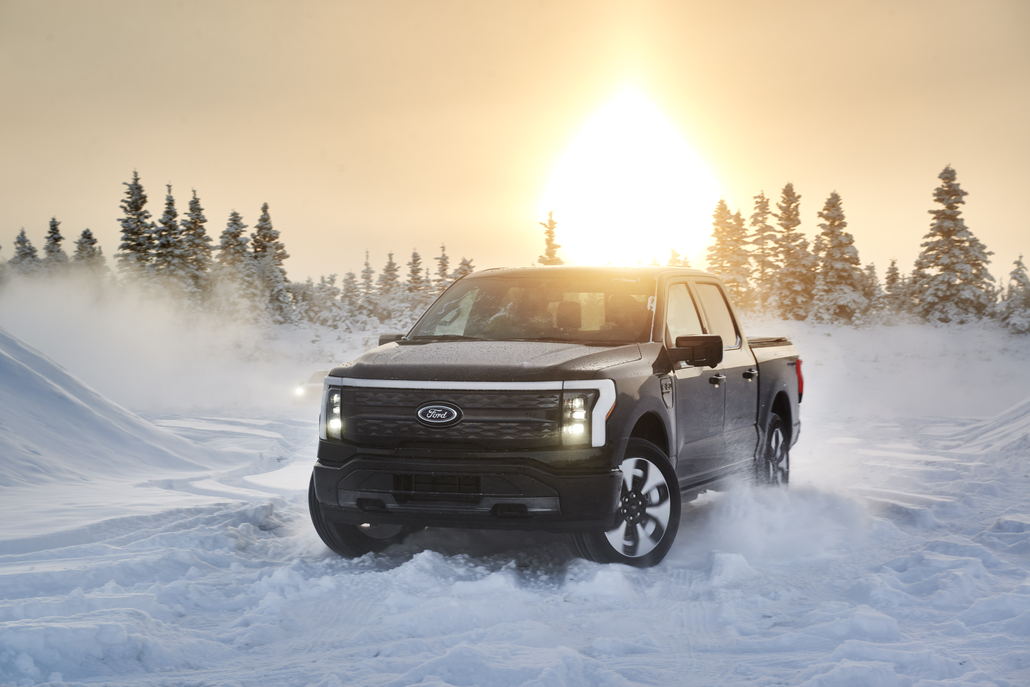
F-150 Lightning vs Cybertruck

When Ford introduced the F-150 Lightning, no one could believe that such a vehicle really existed. The overall design didn’t change, and there was no radical departure from its overall functionality. Customers loved how familiar they were with an F-150, only electrified. There was even a bit of a fight between Ford CEO Jim Farley and Tesla CEO Elon Musk over which company would be the first to bring its all-electric pickup truck to market. Spoiler alert: Ford won. Meet The F-150 Lightning The F-150 Lightning features dual-emotors with all-wheel drive and comes in two different flavors: a standard range and an extended range battery pack. The standard range Lightning has a 98 kWh battery that produces 452 horsepower and 755 lb-ft of torque, while the extended range models have a 131 kWh battery with 580 horsepower and 775 torque. Trims, Pricing, And Range Customers can choose from four different trim levels: XLT, Flash, Lariat, and Platinum. The base trim starts at just $65,090, with the top-line Platinum starting from $88,085. The XLT and Flash trim levels have a driving range of 240 miles, while the Lariat has 320 miles, and the Platinum can drive 300 miles. Meet The Tesla The Tesla Cybertruck is the latest hotness that everyone’s talking about. However, how does it really stack up? With such an odd and unique design, are customers able to utilize the Cybertruck as a real truck? Buyers who have recently gotten their trucks have received the Foundation series, which features a dual-motor all-wheel drive setup with 600 horsepower and 525 lb-ft of torque. Stepping up to the Beast trim gets you a tri-motor Cybertruck with 834 horsepower and 740 lb-ft of torque. Towing Capacity, Range, And Price Tesla says the truck can tow a maximum of 11,000 lbs. However, there have been reports of people being frustrated when towing with the Cybertruck due to the range being exhausted very quickly. Many owners have also remarked on how easy it is to mark up the stainless steel panels. Some have stated that it isn’t a serious truck but more of a vehicle that can do light-duty truck things from time to time. The two trim levels are able to achieve 318 and 301 miles of driving range, respectively. Dual motor Cybertrucks have a base price of $99,990, while the Beast has a base MSRP of $119.900. A Tale of Two Frunks The Tesla’s bed length is slightly longer at 6 feet compared to 5’5” on the Lightning. However, because of the odd way the Cybertruck’s bed is shaped, they can both hold about the same amount of stuff. The Ford really shows how brilliant it was to turn a standard gas-powered vehicle into a dedicated EV when you get to the frunk. A space that once held an entire engine is now free to give owners 14.1 cu.ft. of space, the same space as a small or midsize sedan’s trunk. In fact, that is actually bigger than the 12.6 cu.ft. of trunk space in the Mercedes-Benz C-Class. The Tesla only gives customers 7.1 cu.ft. A BIG Price Difference The Tesla Cybertruck can tow 1,000 lbs more, but the Ford is a lot less expensive. Without any options, the base model Tesla is nearly $35,000 more expensive than the base XLT F-150 Lightning. Even when talking about the top-of-the-line Platinum, it still is a savings of almost $12,000. Oh, and the Lightning can use Tesla Superchargers with an adapter. Edmunds Compared The Ford And The Tesla In a recent test by Edmunds.com that compared the Ford, Tesla, and the Rivian R1T, the team voted the F-150 as the best of all EV trucks and said that in the comparison, it is by far the best at being a pickup with truck usability. That’s precisely why Ben Westby chose the Lightning to own while living off the grid with his family. With 9.6 kW of Ford Pro Power Onboard, owners can easily charge lawnmower batteries, use power tools, operate a mobile business, or even just have fun tailgating with the knowledge that you can power it all from your truck and then drive home afterward. Ford Blue Cruise Doesn’t Lie Where Tesla has gotten in trouble is the marketing around FSD, or Full Self Driving. The claim that the vehicles are self-driving has proven false, and the company has had to change how it defines the feature. Ford, on the other hand, has had great success with Blue Cruise, their hands-free advanced driver assistance system. With over 130,000 miles of roads mapped around the United States, buyers who were skeptical of taking their hands off the steering wheel are now full believers. Driving in traffic and on the highway has never been easier to live with. At Benna Ford, we offer our customers some of the best prices and services. With more than 100 new and used vehicles to choose from, our outstanding sales team and finance department will work hard to make sure you drive away happy. Our fantastic service department will take care of your new-to-you vehicle as if it were their own.

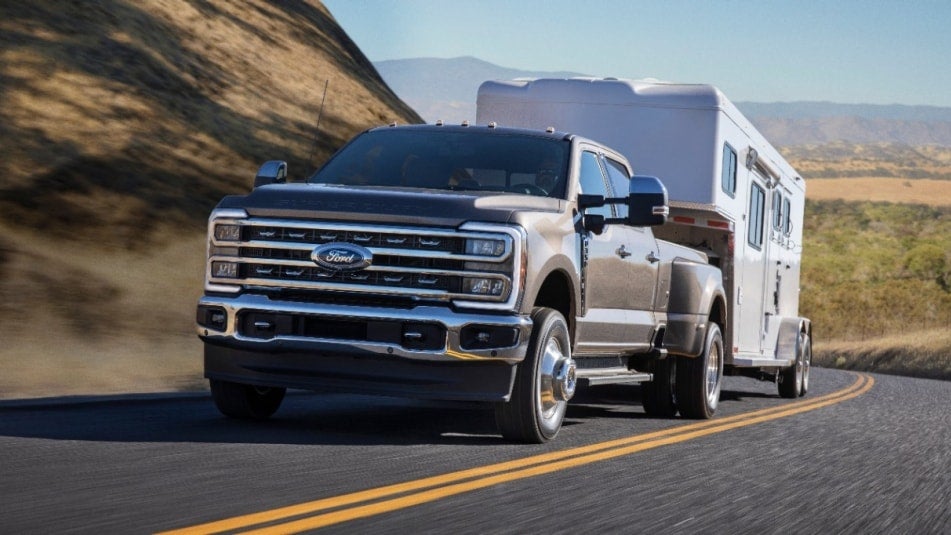
Ford Power Stroke Towing

Keep Your Power Stroke Diesel Running Strong

Ford has been producing Power Stroke diesel engines since 1994. In those 30 years, the engines have been used in various applications, including light trucks, HD trucks, commercial trucks, and agricultural equipment. Over the years, the Ford Power Stroke family of engines has grown to where there are currently five Power Stroke engines available. Ford has a reputation for producing reliable diesel engines that can withstand the rigors of heavy use. Many owners report getting over 200,000 and sometimes over 300,000 miles out of their engines with proper maintenance. But proper maintenance is key. Benna Ford offers these suggestions to keep your Power Stroke diesel working for you for a long time. Three elements in Power Stroke maintenance are keeping to the schedule, using the right parts and fluids, and being aware of whether your vehicle is undergoing “Special Operating Conditions.” The most notable Special Operating conditions include: Frequent or extended idling (over 10 minutes per hour of normal driving) Frequent low-speed operation Sustained traffic speeds of less than 25 MPH. (One hour of idle time is equal to approximately 25 miles of driving.) Sustained vehicle operation in ambient temperatures below -10°F (-23°C) or above 100°F ( 38°C) Operating in severe dust or off-road conditions Towing a trailer over 1,000 miles Sustained, high-speed driving at or near the Gross Vehicle Weight Rating Use of any Biodiesel (B5 is the maximum allowable blend for Power Stroke Diesels, except the all-new 6.7L) After determining which conditions your Power Stroke engine operates within, you can choose the following service schedule below for your regular maintenance. Normal Operating Conditions Ford Recommended Maintenance Levels Power Stroke Engine 6.0-liter 6.4-liter 6.7-liter 6.9-liter & 7.3-liter Change Oil & Oil Filter Every 7,500 miles Every 10,000 miles Change according to message center in instrument cluster Every 5,000 miles Change Fuel Filter Every 15,000 miles Every 20,000 miles Every 3rd Oil change or 22,250 miles, whichever comes first Every 15,000 miles Inspect / Change Air Filter Inspect filter minder every 7,500 miles Change is needed Inspect filter minder every 10,000 miles Change is needed Inspect filter minder every 10,000 miles Change is needed Inspect filter minder every 5,000 miles Change is needed Check / Change Coolant Every six months, with initial change at 100,000 miles Subsequent changes every 45,000 miles Every six months, with initial change at 100,000 miles Subsequent changes every 50,000 miles Initial change at 105,000 miles or 72 months Subsequent changes every 45,000 miles Every 15,000 miles Check Coolant Nitrite Strength Optional check at 15,000 miles or 600 engine hours Optional check at 20,000 miles or 800 engine hours Check at 15,000 miles or 600 engine hours Every 15,000 miles Special Operating Conditions Ford Recommended Maintenance Levels Power Stroke Engine 6.0-liter 6.4-liter 6.7-liter 6.9 & 7.3-liter Change Oil & Oil Filter Every 5,000 miles or 200 engine hours Every 5,000 miles or 200 engine hours Change according to message center in instrument cluster Every 3,000 miles or three months Change Fuel Filter Every 10,000 miles or 400 engine hours (every other oil & oil filter change) Every 10,000 miles or 400 engine hours (every other oil & oil filter change) Every 5,000 miles Replace as needed Every 15,000 miles Inspect / Change Air Filter Inspect filter minder every 5,000 miles. Change is needed. Inspect filter minder every 5,000 miles. Change is needed. Inspect filter minder every 10,000 miles. Change is needed. Inspect filter minder every 3,000 miles. Change is needed. Check / Change Coolant Check every 15,000 miles or 600 engine hours. Change every 45,000 miles or 1,800 engine hours. Check every 20,000 miles or 800 engine hours. Change every 60,000 miles or 2,400 engine hours. Initial change 60,000 miles or 2,400 engine hours Subsequent changes every 45,000 miles or 1800 hours Change every 15,000 miles Check Coolant Nitrite Strength Optional check at 15,000 miles or 600 engine hours Optional check at 20,000 miles or 800 engine hours Check every 15,000 miles or 600 hours Every 15,000 miles For regular maintenance of your Power Stroke engine, Ford recommends its line of Motorcraft brand filters, oil, coolant, and Cetane and anti-gel fuel additives, all of which are designed and formulated specifically for Ford Power Stroke engines. You can find all these maintenance supplies at Benna Ford’s Service Department. If you have any maintenance questions, don’t hesitate to inquire with the Benna Ford service professionals.

Ford F-150 Tremor

The Car Connection Samples the F-150 Tremor and Hybrid

The Car Connection wanted to look at the changes Ford made to the 2024 F-150 and chose to do it through two of its more interesting models: the Tremor and the hybrid model. Benna Ford gives you the highlights of what they found. General changes for the 2024 F-150 model line are not drastic but significant enough to noticeably improve your ownership experience. It starts with a new Pro Access tailgate design with a side-swinging door. The door covers about the middle third of the tailgate and swings for an opening on the driver’s side. The Pro Access tailgate is a practical addition. It not only allows you to access your load without reaching over a closed gate or across an open one but also lets you access the bed while towing. The mid-door hinges are designed to hold open at 100, 70, or 37 degrees, with the smaller number set specifically for towing, ensuring it holds open without encountering any part of the trailer tongue. The tailgate drops down either manually or by power as it did before, maintaining its user-friendly nature. A grab handle in the bed replaces the former retractable handle, and a retractable step plus a wider center bumper step helps you climb into the bed. The Car Connection summarizes these changes this way: “It’s a cleaner, more functional design that makes getting things in and out a lot easier.” The other exterior change is a revised grille and headlight combo that wraps around the corners for a less brick-like front-end appearance. Now available is a front modular bumper that enables the attachment of accessories such as an LED light bar, an available factory-installed 12,000-pound winch, or other accessories. All 2024 F-150s are equipped with a standard 12.0-inch touchscreen in the cabin and an identical-sized digital gauge cluster outside. All but the hybrid model now get a 36-gallon fuel tank and a standard Class IV hitch. The Tremor is the off-road-focused F-150 that is just one step on the reasonable side of the gonzo Raptor, and The Car Connection found that if you didn’t buy your truck just to beat the heck out of it and aim for high jump records, the Tremor might be the most well-rounded choice in the lineup. The ground clearance increases by 1.6 inches over a standard F150 to 9.8 inches, and the rolling stock is 33-inch General Grabber A/TX tires wrapping black 18-inch wheels. The 4x4 system includes a locking rear differential and Hill Descent control. It also comes with Trail Turn assist, which locks the inside rear wheel to enable tighter turns, to “ essentially shrink the wheelbase,” as the site describes it. It will get you anywhere on the farm or construction site, even after a rain, and can tow up to 13,000 pounds compared to 8,300 for the Raptor. While it has an inch-wider track than a standard F-150, it is still a half-foot narrower than the Raptor, giving you a little more room in the parking spot or garage. It also costs $14,180 less. The Car Connection describes its off-road capability like this: “I tested the new model on a switchbacking access road up and down a mountain, deep in off-the-grid territory, ascending over rocky ruts and descending into terrain too tough for Subarus or soft-roaders. It impressed me enough to recommend it as the F-150 to buy. “ The F-150 Hybrid remains one of only two full-size hybrid pickup trucks on the market. All Hybrid models are 4x4 now and start with the XLT trim level. The powertrain remains unchanged: a twin-turbo 3.5-liter V6 combined with a 35-kW motor fed by a 1.5-kWh battery pack, with 430 total system horsepower running through the model line’s standard 10-speed automatic transmission for heading out to all four wheels. The most significant mechanical news is that the belt-integrated starter has been eliminated in favor of simply starting the vehicle from a 12-volt battery and a conventional flywheel-mounted starter. It seems like a simple thing, but Ford says the change involved 300 software enhancements to make the change. The Car Connection made a note of this change: “(the previous model) could feel uncertain in low gears, as if the system didn’t know when to use the engine, motor, or dual power at once. Now, on roads leading to the highway, it felt quieter, calmer, and overall less noticeable, which is what I want out of any hybrid powertrain.” The strength of the fuel mileage is manifest in city driving, with a figure of 22, while all other F-150s range across the teens, from 19 for the 2.7-liter 2WD to just 10 for the V8 Raptor. The hybrid highway mileage is 24 for a combined 23 figures. The Car Connection found all of the 2024 changes to be quite welcome and summed up their experience this way: “Add up all of these small changes, and it’s easy to see how the Ford F-150 continues to lead the pickup truck segment in America.” If you are considering a new full-size pickup truck, shopping for the F-150 has always been a must, and now it is even more so. We invite you to do just that at Benna Ford in Superior, Wisconsin.

Mustang Mach-E Rally Driving on a Forest Trail Front View

Motor Authority Drives The New Mach-E Rally

Rallying is one of the most challenging competitions in motorsports. Vehicles run on-road, off-road, in all kinds of terrain and weather conditions, and the driver often doesn’t even know what is ahead but for turn-by-turn commands from their human navigator. Yet rallying has never really caught on in the states as other motorsports have, possibly because it is not very television-friendly. It is a point-to-point event, making it hard for cameras to cover it adequately. Plus, entrants compete for time, not position, so you don’t have vehicles closely battling for a lead. So, to make a rally edition of the Mustang Mach-E may pose a marketing challenge. However, Motor Authority found the vehicle itself to be nearly brilliant. This Benna Ford review follows their findings. Motor Authority leads their review with a general truism: “ The fastest, most powerful models in any lineup can often end up as one-trick ponies.” This is particularly true for performance-focused model lines, where the pursuit of the lowest quarter-mile time or highest lateral-G on a slalom often leads to sacrifices that compromise the car when it is out of its element or asked to perform the more mundane duties of providing transportation. The multiple talents required of a rally-focused vehicle help mitigate that for the Mach-E Rally. The basic go-and-stop components of the Mach-E Rally match the Mach-E GT’s with the latter’s 480 horsepower and 700 lb-ft of torque from motors at the front and rear and the 15.0-inch Brembo front brake rotors. Unlike the GT, the Rally is all about having fun and plenty of speed off the road. Thus, it sits about an inch higher, and the MagneRide magnetic damping system - also found in the GT - has been tuned for both on- and off-road action. There is more wheel travel and quicker rebound while reducing the chances of bottoming out. Also retuned is the power distribution between the front and rear motors, which have the advantage of responding with electronic rather than mechanical quickness. This is most noticeable when you switch to RallySport drive mode, which, as Motor Authority describes: “...makes the accelerator more linear, and it ramps up the steering boost—because you might need to go opposite-lock at any moment.” Ford tested the Mach-E on an unpaved course in Michigan and sought input from rallycross drivers. Both an advantage and a challenge in terms of control is the instant torque of electric motors, meaning that 700 pound-feet can be accessed at any given moment. The Motor Authority author had rally experience, which included putting the hammer down early so as to have the torque built up to where you need it when the moment comes. With the Mach-E, you must recalibrate to bring on the power precisely when needed. Front/rear power distribution can go as far as 20:80, and with 700 pound-feet at your foot, swinging the tail on an unpaved surface is not a challenge. While the Mustang Mach-E Rally is designed for off-road performance, it also excels in everyday highway driving. The magnetic dampers, known for their ability to reduce road harshness, ensure a comfortable ride even on rough roads. Plus, with its all-wheel drive system, the Mustang Mach-E Rally offers excellent traction in rain and snow. The is notably not rally-car spartan but instead features flagship model comforts like ambient cabin lighting, heated front seats, a heated steering wheel, memory settings, a power tailgate, and a 10-speaker Bang & Olufsen premium sound system, which, thanks to the quiet electric powertrain, can be enjoyed even at high speeds. The Mustang Mach-E Rally is instantly recognizable by its unique design elements. The raised height is accentuated by white rally-style 19-inch wheels wrapped by Michelin CrossClimate2 tires and a front “grille panel” with integrated fog lights. The front splitter is reshaped for a better approach angle, enhancing the vehicle's off-road capabilities. Another general truism of a model line’s performance model is reduced efficiency. Internal combustion engines manifest this in fuel efficiency. With EVs, the metric is operating range. The raised height and rugged tire/wheel combo knock just 15 miles off the GT’s 280-mile range, though, of course, neither performance model approaches the 320 miles from single-motor Mach-Es. Such is the price to pay for rally-style fun, and as Motor Authority concludes: “In an era when driving fast often involves merely pushing the accelerator to the floor while electronic nannies do all the work, it’s refreshing to feel a system that acts primarily as an aid to the driver in a vehicle that feels like it channels a kind of all-electric fun that hasn’t been emphasized enough. It’s certainly not a one-trick pony.” The Mustang Mach-E Rally is now the flagship for the Mach-E model lineup and a must-see for anyone who enjoys off-road performance and appreciates the advantages of EVs. If you are interested, check in and see if Benna Ford has one in inventory, and if not, ask one of our sales professionals to find one for you to try out.

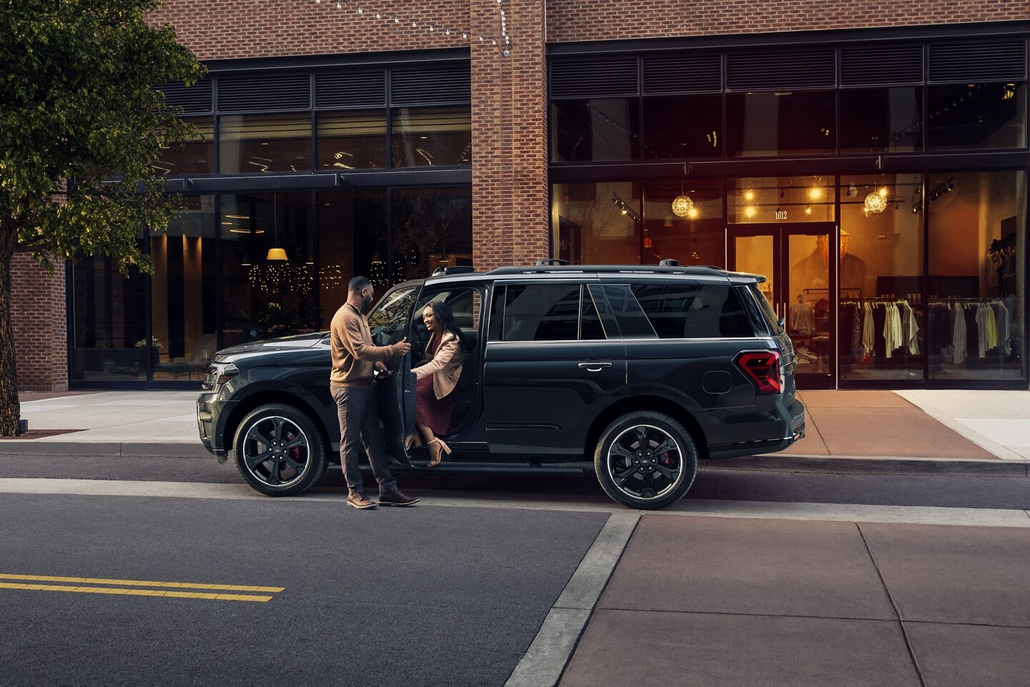
Man Helping a Woman out of a Ford Expedition Parked Side View Next to a City Curb

Comparing the Ford Expedition to the Chevy Suburban

When it comes to full-size SUVs, the biggest players in every sense of the word are the Ford Expedition and Chevrolet Suburban. Both of these vehicles offer the promise of seemingly limitless capability. They can carry large quantities of family and friends and their stuff, tow big toys, and, with available 4WD, plow through snow-covered and unpaved roads without a care in the world. Benna Ford compares these two big boys. Size Starting with these model’s obvious attributes, the Suburban is clearly much larger. Fifteen inches shorter, the Expedition is actually closer to the Chevrolet Tahoe in size, while the stretched Expedition MAX approaches the Suburban’s length, though it is still 3.8 inches shorter. The Suburban’s size means that it will not fit into many single-family home garages. The Expedition XL is a five-seater, but all other trims have a third row to seat eight. Most Suburbans also seat eight, though there is a seldom-ordered option to replace the front bucket seats with a bench for a total seating capacity of nine. While the Expedition MAX closes the gap, the Suburban still has greater cargo space: Cargo Space (cubic feet) Behind: 3rd row 2nd row 1st row Expedition 19.3 53.6 104.6 Expedition MAX 34.3 79.6 121.5 Suburban 41.5 93.8 144.7 The difference is diminished when it comes to passenger space. The Expedition and the MAX have the same passenger space, and when comparing legroom against the Suburban, both 2nd-row and 3rd-row legroom differs by about half an inch. Drivetrains The Expedition counters with more modern engines. The Suburban offers 5.3-liter and 6.2-liter V8 engines as well as a V6 Duramax Turbodiesel. Generally, each Suburban trim offers two of the three engine choices. All Expeditions are powered by a 3.5-liter twin-turbo V6 in three available states of tune, which are determined by the trim level. V8 power may seem as American as apple pie, but the turbocharged V6s are the stars in this group. Expedition 3.5L Twin-Turbo V6 Horsepower Torque (lb-ft) XL, XLT, STX 380 @ 5,000 470 @ 2,250 Limited, King Ranch, Platinum 400 @ 5,000 480 @ 2,250 Limited Stealth Performance, Timberline 440 @ 5,000 510 @ 2,250 Suburban 5.3L V8 355 @ 5600 383 @ 4100 6.2L V8 420 @ 5600 460 @ 4100 3.0 Turbo Diesel V6 277 @ 3750 460 @1500 As seen above, the base engine of the Expedition has significantly more horsepower than the base Suburban engine. Its torque is greater than all available Suburban engines, including the diesel. Higher-tune Expedition engines increase the torque differences. At the same time, the Expedition provides greater fuel economy than both Suburban V8 engines. As the Superior, WI area is very much 4x4 country, the 4X4 figures are shown: Expedition 3.5L Twin-Turbo V6 EPA city/hwy/comb. mpg XL, XLT, STX (4x4) 16 / 22 / 18 Limited, King Ranch, Platinum (4x4) 16 / 22 / 18 Limited Stealth Performance, Timberline (4x4) 16 / 19 / 17 Suburban 5.3L V8 (4x4) 15 / 18 / 16 6.2L V8 (4x4) 14 / 18 / 16 3.0L Turbodiesel V6 (4x4) 20 / 26 / 22 The Suburban’s diesel engine has the best mileage of all, though this is somewhat mitigated by the higher price of diesel fuel. The greater torque of the Expedition engines contributes to greater towing capacity. Again, focusing on 4X4 models, the Expedition has a maximum towing capacity of 9,200 lbs., dropping to 9,000 lbs. for the MAX model. By contrast, the maximum towing capacity for a 4x4 Suburban is 8,000 lbs. with the 5.3L V8, 7,900 lbs. with the 6.2L V8, and 7,800 lbs. with the diesel engine. Interior and Technology Both models range from basic accommodations with cloth seats to absolute indulgence bathed in soft leather. For the Suburban, which starts at $64,195 with 4WD, basic accommodations include an 8-inch infotainment screen bumping up to 10-inch for the rest of the model line, analog gauges with a 4.2-inch information screen, a 6-speaker audio system, 10-way power front seats, and tri-zone climate control. The Expedition starts at $57,660 for an XL STX with 4WD, though that only includes seating for five. The 8-passenger XLT with 4WD starts at $62,635, and the MAX version starts at $65,695. All three come standard with a 12-inch center screen, beating the largest on the Suburban. Also standard are 8-way power front seats, tri-zone climate control on XLT, analog gauges with an 8-inch information screen, and power-folding 3rd-row seats. A very large 15.5-inch center screen that can be seen throughout the cabin is an option on upper trim levels. At the top of each model line, along with soft leather, panoramic roofs, and 360-degree camera systems, the Suburban High Country offers a 10-speaker Bose ® Surround Sound audio system. Still, the Expedition outclasses it with a standard 22-speaker Bang & Olufsen surround sound system on King Rang and Platinum models. Safety and Driver Assistance The Suburban and Expedition both carry standard automatic emergency braking, active lane control, and automatic high beams. The Expedition also has a standard blind-spot monitor, which you can use on vehicles of this size. The Expedition has an Overall 5-star rating from the NHTSA, including 5-star ratings for all impact tests. The Suburban has a 4-star overall rating, scoring less on frontal crash and rollover tests.  At the top of the model range, both models offer a hands-free highway driving system based on pre-mapped roads. For North America, GM claims over 400,000 highway miles for its Super Cruise, while Ford’s Blue Cruise claims coverage of 97% percent of controlled access highways. Either will probably be suitable for your long trips. Super Cruise does have automatic lane change, which Blue Cruise lacks. Expedition is a Winner Both models have their strengths. The Suburban is bigger, but the Expedition really stands out with better powertrains, gas efficiency, greater towing capacity, big touchscreens, and better safety scores. Take a closer look at the Expedition and Expedition MAX at Benna Ford in Superior, Wisconsin.


Contact Us

Fill out this form below and we'll contact you shortly
*Required Fields