
Blog / Comparisons

Blog

All Comparisons Information News Innovation New Vehicles Ford Ford Performance F-150 Service Technology Bronco Awards Mustang Features Ford EVs F-150 Lightning Maverick Ranger Escape History Safety Electric Vehicles Expedition Mustang Mach-E Racing Mach-E Raptor Super Duty Deals Lifestyle Explorer Transit Events F-Series Specs Tips Benna Ford Toy Store F-150 Raptor R Mustang GTD Roush Tuscany Used Vehicles BlueCruise Bronco Sport Deals Offers and Specials F-150 Tremor FordPass Rewards Formula 1 Mustang GT3 Rousch Shelby Warranties
Ford Bronco | Ford Bronco Sport

Ford Bronco vs Ford Bronco Sport: Which SUV Is Right for You?

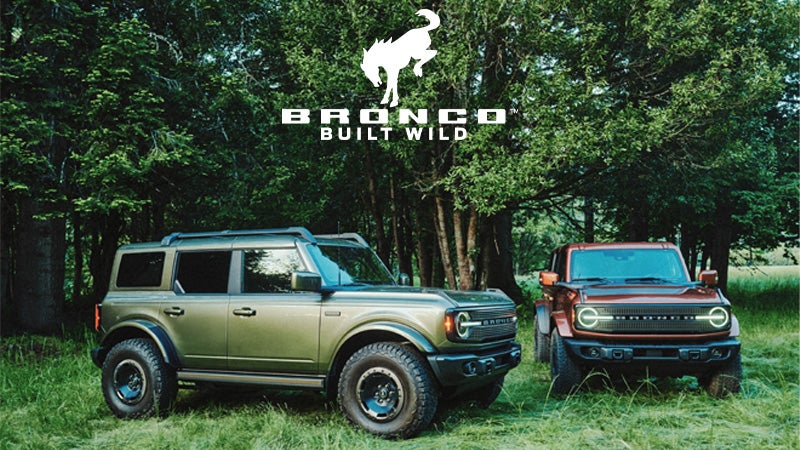
The Ford Bronco and Ford Bronco Sport share the same adventurous spirit, rugged styling, and available off-road technology, but they are designed for different types of drivers. The Bronco is a body-on-frame SUV built for serious off-road capability with available removable doors and roof panels, while the Bronco Sport is a more compact SUV that combines everyday practicality with impressive trail-ready performance. If you're trying to decide which Ford SUV best fits your lifestyle, this comparison will break down the key differences in size, capability, interior space, towing, and technology to help you choose the right Bronco for your next adventure. Bronco vs Bronco Sport: What's the Difference? While the Ford Bronco and Ford Bronco Sport share a legendary nameplate and rugged styling, they were built with different purposes in mind. Both SUVs are designed for adventure, but they offer unique strengths depending on how and where you plan to drive. The Ford Bronco is engineered for drivers who want maximum off-road capability. It features a rugged body-on-frame design, available removable doors and roof panels, advanced 4x4 systems, and purpose-built off-road technology that helps tackle challenging terrain. It is available in both two-door and four-door configurations and is designed to help drivers confidently explore beyond the pavement. The Ford Bronco Sport, on the other hand, is a compact SUV designed to balance everyday practicality with weekend adventure. Its smaller size makes it easier to maneuver in traffic, parking lots, and city environments while still offering available off-road-focused features, standard SUV versatility, and impressive capability for outdoor enthusiasts. In simple terms, the Ford Bronco is ideal for drivers seeking serious off-road performance and customization, while the Ford Bronco Sport is perfect for those who want adventure-ready capability in a more compact and daily-driver-friendly package. No matter which model you choose, both vehicles carry the adventurous spirit that has made the Bronco name legendary. Size Comparison While both SUVs share the Bronco name, the Ford Bronco and Ford Bronco Sport occupy different segments and offer different amounts of passenger and cargo space. Choosing the right model often comes down to how much room you need and where you plan to drive. The Ford Bronco is the larger of the two vehicles. Depending on configuration, the four-door Bronco measures up to 189.4 inches in length and rides on a 116.1-inch wheelbase, giving it a more spacious footprint and a commanding presence on and off the road. The Bronco is available in both two-door and four-door configurations, offering buyers additional flexibility. The Ford Bronco Sport is a compact SUV available exclusively as a four-door model. It measures 172.7 inches long and has a 105.1-inch wheelbase, making it easier to maneuver in tight parking lots, city traffic, and crowded trailheads. Its smaller size can be a significant advantage for drivers who want adventure-ready capability without the larger footprint of a midsize SUV. Cargo space is another important difference. The Bronco Sport offers up to 65.2 cubic feet of cargo capacity with the rear seats folded, making it easy to pack camping gear, sports equipment, or luggage for a weekend getaway. The larger Bronco, particularly in four-door form, provides even more interior volume and cargo flexibility for families and outdoor enthusiasts who regularly travel with passengers and gear. For drivers who prioritize easy maneuverability and everyday practicality, the Bronco Sport's compact dimensions may be the better fit. Those who need additional passenger room, cargo space, and a more substantial off-road platform may prefer the larger Ford Bronco. Off-Road Capability Comparison If off-road performance is a top priority, both the Ford Bronco and Ford Bronco Sport are designed to go beyond the pavement. However, the Ford Bronco is engineered for more extreme adventures, while the Bronco Sport focuses on delivering capable off-road performance in a compact, everyday-friendly package. The Ford Bronco was built from the ground up for serious off-roading. Its body-on-frame construction, available advanced 4x4 systems, and impressive off-road geometry help it tackle challenging terrain with confidence. Depending on the model and equipment, the Bronco offers up to 13.1 inches of ground clearance, up to 47.2 degrees of approach angle, and up to 37 inches of water-fording capability, making it one of the most capable SUVs in the Ford lineup. The Ford Bronco Sport is designed for drivers who want adventure-ready capability without moving into a larger SUV. Every Bronco Sport comes equipped with a 4x4 system, and available G.O.A.T. Modes™ (Goes Over Any Type of Terrain) help optimize performance in varying conditions such as mud, sand, snow, and gravel. The Bronco Sport Badlands® even adds a dedicated Rock Crawl mode for enhanced off-road confidence. For exploring forest roads, reaching remote campsites, or handling challenging weather conditions in northern Minnesota and Wisconsin, the Bronco Sport is more than capable. However, for drivers planning frequent trips to difficult trails, rocky terrain, or serious off-road parks, the Bronco's larger dimensions, greater ground clearance, and specialized off-road hardware give it a significant advantage. Interior and Cargo Space Both the Ford Bronco and Ford Bronco Sport offer practical interiors designed for active lifestyles, but their cabins are tailored to different needs. The Bronco emphasizes passenger room, versatility, and open-air freedom, while the Bronco Sport focuses on everyday comfort, clever storage solutions, and efficient use of space. The Ford Bronco is the larger vehicle and offers more interior space overall, particularly in four-door models. It provides generous seating for passengers and plenty of room for gear, making it a great choice for families, road trips, and outdoor adventures. The available rubberized flooring and washout interior options on select models also make cleanup easier after a day on the trail. The Ford Bronco Sport may be smaller on the outside, but it makes excellent use of its interior space. Behind the rear seats, the Bronco Sport offers up to 32.5 cubic feet of cargo room, expanding to 65.2 cubic feet with the rear seats folded flat. Its tall roofline and versatile cargo area make it easy to load camping gear, coolers, bicycles, or luggage for a weekend getaway. Both SUVs feature modern technology and flexible storage options, but drivers who regularly travel with more passengers or larger equipment may appreciate the Bronco's larger footprint. For those looking for a compact SUV that remains highly practical for daily life and outdoor adventures, the Bronco Sport delivers impressive cargo versatility in a more manageable package. Towing Capacity If towing is an important part of your lifestyle, the Ford Bronco has a clear advantage over the Ford Bronco Sport. While both SUVs can handle small trailers and outdoor gear, the Bronco was designed with greater capability in mind and offers higher towing capacities across most of the lineup. The Ford Bronco can tow up to 4,500 pounds when properly equipped, making it a great choice for hauling small campers, boats, utility trailers, or powersports equipment. Combined with its rugged construction and available 4x4 systems, the Bronco is well-suited for drivers who want to bring their gear along for the adventure. The Ford Bronco Sport offers a maximum towing capacity of up to 2,700 pounds on properly equipped Badlands® models with the available Class II Trailer Tow Package. Other Bronco Sport models can tow up to 2,000 pounds when properly equipped. This is more than enough for many small trailers, lightweight watercraft, and camping gear, but it falls short of the capability offered by the larger Bronco. For drivers who frequently tow heavier loads or plan on bringing larger recreational equipment on weekend trips, the Ford Bronco is likely the better fit. However, if your towing needs are occasional and relatively light, the Bronco Sport provides plenty of capability while maintaining the efficiency and maneuverability of a compact SUV. Fuel Economy When it comes to fuel efficiency, the Ford Bronco Sport has the advantage. Its smaller size, lighter weight, and unibody construction help it achieve better fuel economy than the larger, more off-road-focused Ford Bronco. For drivers who spend most of their time commuting, running errands, or taking weekend road trips, the Bronco Sport's efficiency may be a significant factor in the decision-making process. Most Ford Bronco Sport models equipped with the standard 1.5-liter EcoBoost® engine are rated at up to 25 mpg city, 30 mpg highway, and 27 mpg combined, providing an excellent balance of capability and efficiency. Even the more powerful Badlands® model with the available 2.0-liter EcoBoost® engine offers respectable fuel economy for an adventure-ready SUV. The Ford Bronco prioritizes capability over fuel economy. Available with a choice of EcoBoost® engines, advanced 4x4 systems, and rugged off-road equipment, the Bronco is designed to tackle challenging terrain rather than maximize mpg. Fuel economy varies based on engine choice, body style, and equipment, but drivers can generally expect lower fuel-efficiency ratings than those offered by the Bronco Sport. If your adventures involve daily commuting and frequent highway driving, the Bronco Sport may offer greater long-term fuel savings. However, if your priority is maximizing off-road capability and trail performance, many drivers find the Bronco's rugged capabilities well worth the tradeoff. Which Ford SUV Is Better For Winter? Both the Ford Bronco and Ford Bronco Sport are well-equipped for winter driving, making either SUV a strong choice for drivers throughout the Northland. Whether you're commuting through Duluth, navigating snow-covered back roads around Superior, or heading north for a weekend at the cabin, both vehicles offer the traction and confidence needed to handle challenging winter conditions. The right choice comes down to how and where you drive. The Ford Bronco is built for drivers who regularly encounter deep snow, unplowed roads, and rugged terrain. Its available advanced 4x4 systems, generous ground clearance, and trail-focused engineering give it an advantage when winter weather becomes especially harsh. If your adventures take you off the beaten path for ice fishing, snowmobiling, hunting, or exploring remote areas of northern Minnesota and Wisconsin, the Bronco's capability is hard to beat. The Ford Bronco Sport is ideal for everyday winter driving throughout the Twin Ports and surrounding communities. Every Bronco Sport comes standard with 4x4 capability and features Ford's G.O.A.T. Modes™ (Goes Over Any Type of Terrain), which help optimize traction in snow, ice, and slippery conditions. Its compact size also makes it easier to maneuver through crowded parking lots, residential neighborhoods, and downtown streets after a fresh snowfall. For many Northland drivers, the Bronco Sport provides the perfect combination of capability, efficiency, and practicality for daily commutes and weekend adventures. However, those who frequently travel on unmaintained roads or want maximum confidence during Lake Superior snowstorms may prefer the larger and more rugged Ford Bronco. Quick Winter Driving Comparison: Ford Bronco Available advanced 4x4 systems Higher available ground clearance Excellent for deep snow and remote roads Ideal for outdoor enthusiasts and year-round adventure seekers Ford Bronco Sport Standard 4x4 capability on every model Available G.O.A.T. Modes™ for slippery conditions Easier to maneuver in cities and parking lots Great balance of winter confidence and everyday practicality If your winters involve cabin trips, snow-covered forest roads, and outdoor adventures throughout northern Wisconsin and Minnesota, the Ford Bronco offers the highest level of capability. If you're looking for a versatile SUV that can confidently handle Northland winters while remaining comfortable and efficient for everyday driving, the Ford Bronco Sport is an excellent choice. Either way, both SUVs are designed to help you make the most of every season. Which Ford SUV Is Right For Me? The choice between the Ford Bronco and Ford Bronco Sport ultimately comes down to how you plan to use your SUV. While both vehicles share the Bronco name and an adventurous spirit, they are designed for different lifestyles and driving needs. Choose the Ford Bronco if you want maximum off-road capability, available open-air driving, and the confidence to tackle challenging trails. With its body-on-frame construction, available advanced 4x4 systems, higher ground clearance, and rugged design, the Bronco is ideal for outdoor enthusiasts who spend significant time exploring beyond the pavement. Choose the Ford Bronco Sport if you're looking for a compact SUV that's easy to drive every day while still offering impressive capability for camping trips, hiking adventures, and Northland winters. Its standard 4x4 system, efficient size, versatile cargo area, and strong fuel economy make it an excellent option for drivers who want a balance of practicality and adventure. For many drivers in northern Minnesota and Wisconsin, either SUV will provide the confidence needed to handle snow-covered roads, weekend getaways, and life in the Northland. The best choice simply depends on whether you prioritize everyday convenience or ultimate off-road capability. Choose the Ford Bronco If You: Frequently travel off-road or on challenging trails. Want available removable doors and roof panels. Need greater towing capability. Want the most rugged and capable Bronco experience available. Choose the Ford Bronco Sport If You: Primarily drive on roads and highways. Want a smaller SUV that's easy to park and maneuver. Prioritize fuel efficiency and everyday practicality. Still want the capability to explore trails, campsites, and outdoor destinations. Final Thoughts If your adventures regularly take you deep into the woods, onto rugged trails, or through the toughest winter conditions, the Ford Bronco is likely the better fit. If you're looking for a versatile SUV that balances capability, efficiency, comfort, and practicality for life in the Northland, the Ford Bronco Sport may be the perfect choice. No matter which model you choose, you'll get a capable SUV that's ready to help you explore everything the Northland has to offer, from the shores of Lake Superior to the backroads of northern Minnesota and Wisconsin. Sources: https://www.ford.com/suvs/bronco/ https://www.ford.com/suvs/bronco-sport/
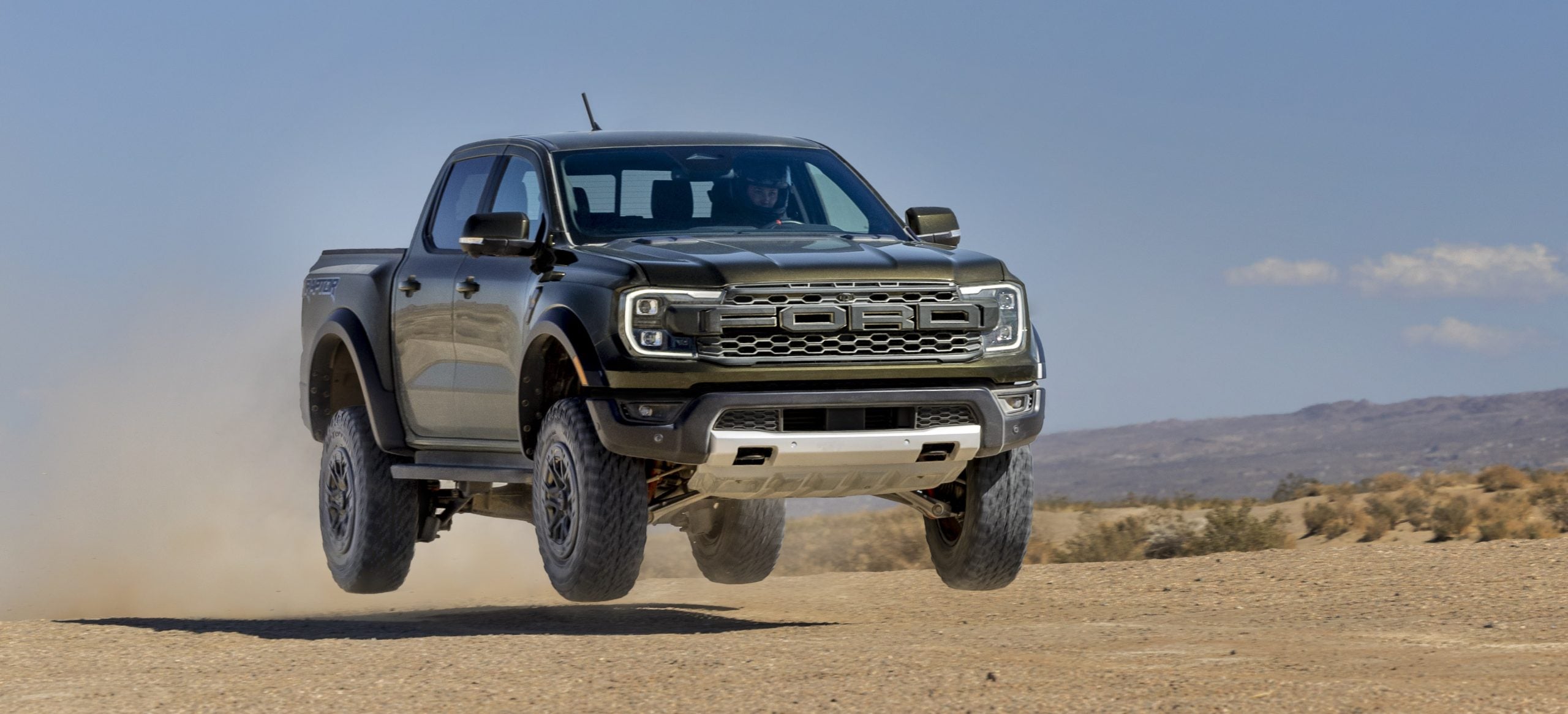
2024 Ford Ranger Raptor

Ford Announces Available Performance Upgrade for Existing Ranger and Bronco Raptors

The Ford Bronco and Ranger Raptors have an enviable reputation as some of the most capable off-road vehicles on the planet that you can still drive home. Ford’s 3.0-liter EcoBoost® V6 powers both models and while the horsepower and torque of either model aren’t exactly lacking, who doesn’t crave more power in vehicles like this? Consequently, Benna Ford is pleased to pass on the news that both models can significantly boost power through a new software calibration from Ford Performance Parts. Available on the 2024 Ranger Raptor and the 2022 – 2024 Bronco Raptor, the power increases are significant, particularly for low-end torque: · Ranger Raptor: Torque increases from 430 to 536 lb.-ft. Horsepower increases from 405 to 455   · Bronco Raptor: Torque increases from 440 to 536 lb.-ft. Horsepower climbs from 418 to 455 The changes significantly improve throttle response, and part of the upgrade includes optimized shift logic to accompany the new power figures. The MSRP for the upgrade is $825, which is a pretty affordable means of that degree of power boost. It can be purchased using Ford Pass Rewards points and installed right here at Benna Ford. Also worth noting is that the calibrations meet Ford durability standards and thus are covered by the vehicle’s three-year, 36,000-mile Ford Performance parts warranty. However, you can get the upgrade for less. The catch is you have to enjoy the heck out of your Ranger or Bronco Raptor at the Raptor Rally, an exclusive one-day event for Raptor owners only near the Ford Performance Racing School in Fairfield, Utah, on Sept. 21, 2024. At the Raptor Rally, you will be able to fly over trails, crawl over rocks, catch air on small hills, test your skill on a Baja-style course, improve your skill with tips from off-road professionals like Vaughn Gitting Jr., Loren Healy, and Chris Voorde. The event is exclusively for Raptor owners and will also include expert workshops, hot lap opportunities, Ford news, exclusive giveaways, meals, and more. All for $500. For Ford Bronco and Ranger Raptor owners, there is an additional incentive: All who attend the rally will receive a 20% off coupon good for the power upgrade as well as other eligible accessories at performanceparts.ford.com. Terms and conditions apply. If you can attend the rally, that would be great! But we understand that not everyone can just take their Raptor 1400 miles to Utah without significant planning. If you are interested in the power upgrade anyway, contact the Benna Ford Service department and discuss it with them.

2024 Ford F150 Regular Cab XL Front Side View

Single Cab Battle: Ford F-150 vs. Chevrolet Silverado

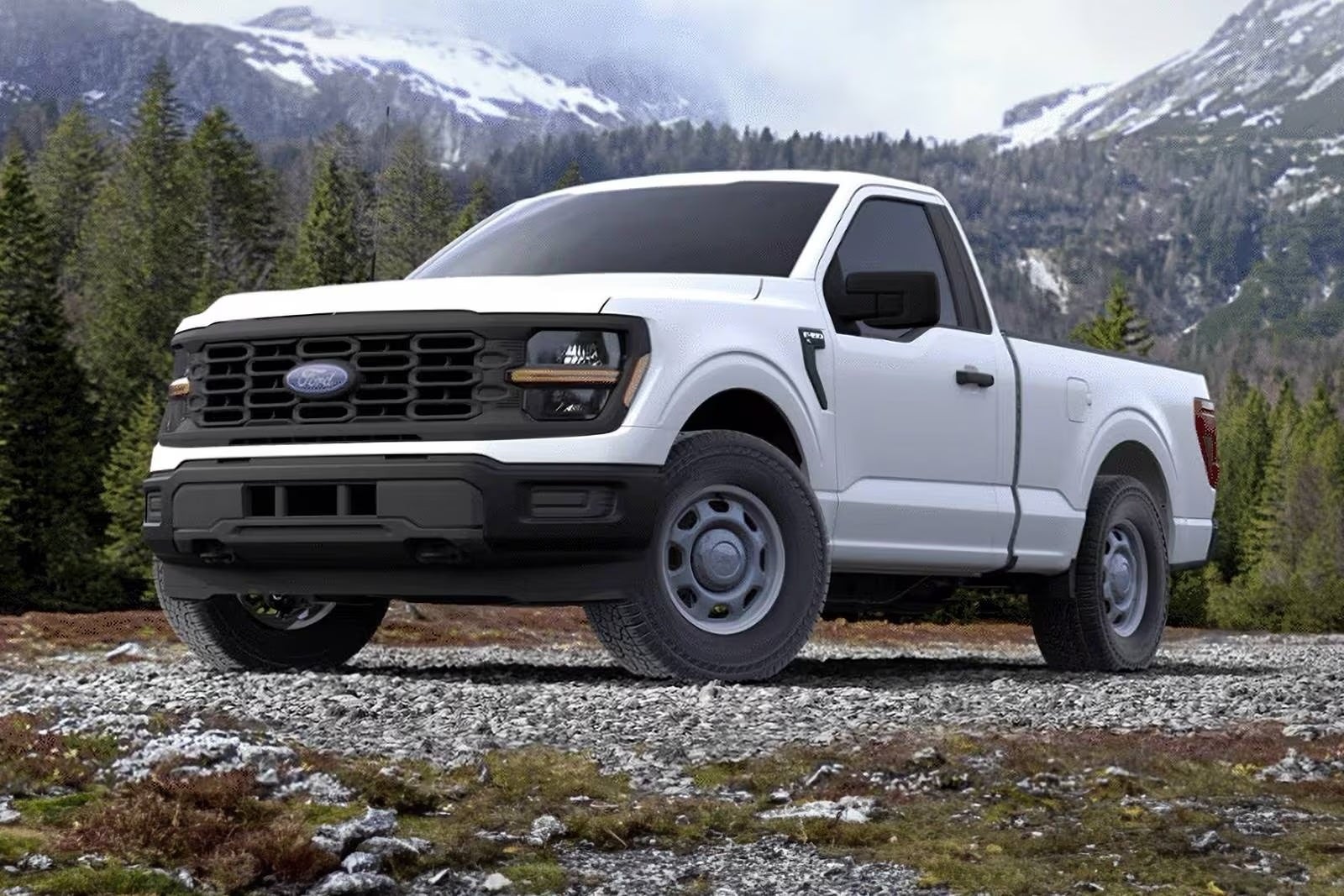
It used to be that the most common pickup truck configuration had only two doors and a bench seat. Luckily, they do exist. The Ford F-150 is still available with a regular cab. It can have one with a 6.5-foot or 8-foot box powered by a 5.0-liter V8 or one of two EcoBoost twin-turbocharged V6s. Ford is not alone in making half-ton regular cab pickup trucks. General Motors can also sell you one from either Chevrolet or GMC. The CarBuzz website recently did a comparison between the Ford-F-150 Regular Cab and its GM rivals. What they found out in this comparison was what we knew all along: We can still make a Regular Cab pickup truck that gets down to work. Numbers are part of the equation with the F-150. The maximum towing capacity for a regular cab with an 8-foot box, four-wheel drive, and a 3.5-liter EcoBoost V6 is 11,000 pounds. For payload, a Regular Cab with an 8-foot box in rear-wheel drive and the 3.5-liter EcoBoost V6 engine can carry up to 2,445 pounds. Four-wheel drive models with the same configuration can also haul up to 2,180 pounds. The F-150 Regular Cab is available in the work-ready XL trim. Yet, it is not as “stripped down” as work trucks used to be. For example, a FordPass 5G LTE Modem is available to connect to your home office to receive work orders and transmit sign agreements. Your productivity is enhanced through a 12-inch touchscreen powered by SYNC 4. The expansive camera views can assist in making sure your F-150 is parked right at the job site. Air Conditioning is standard, keeping you cool and warm throughout the year.  As will the standard cloth seats that are split 40/20/40. If it is just you or another coworker, you can fold down the center backrest for a console. Keeping you safe are available Ford Co-Pilot360 2.0 and Ford Co-Pilot360 Assist 2.0 technologies. They are developed to keep you and your F-150 Regular Cab safe and secure from harm. You can also add more to your F-150 XL Regular Cab. There are plenty of Ford Accessories that we can install for you when you purchase your pickup truck, from bed mats to Foldable Box Bed Extenders for better cargo management where it counts. Plus, there are many more to add to your pickup truck. These accessories can also help with your resale value when it comes to trading it in for a new one down the line. If all you need is just a pickup truck without the extra doors, extra seats, and a work ethic to boot, contact us at Benna Ford to see about getting an F-150 Regular Cab XL pickup truck for your work – or even yourself – soon.

2024 Ford F-150 Raptor_15_converted

The F-150 Tremor and the Raptor R: Which Is For You?

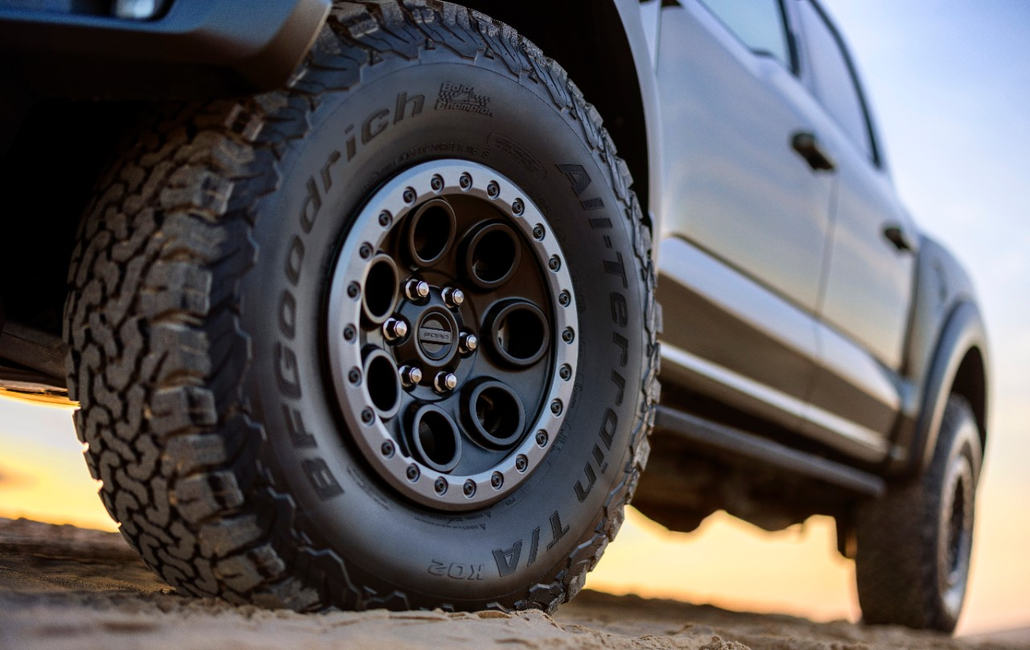
You may already know that the F-150 is the best-selling vehicle in the country. That means there are plenty of trim levels, and nearly all of them have 4-wheel drive. While any 4x4 F-150 will get you in and out of the worksite or take you down a well-worn trail, Ford offers two models for those seeking the particularly rough and rugged. What is the difference between them? Benna Ford explains. The difference can be summed up in their names. Experiencing a tremor is a cause for concern. Experiencing a raptor would be a far more intense experience than anyone who has seen the first Jurassic Park movie will tell you. Tremor The Tremor was originally an option package but has since become its own trim. It starts with having a standard 4x4. Then, including all of the hardware found in the FX4 Off-Road package, including: Locking rear axle Off-road-tuned front shock absorbers Monotube rear shocks Rock Crawl Mode Hill Descent Control Skid plates for the fuel tank, transfer case, and front differential To that, the Tremor adds: Selectable Drive modes Raptor Hi-Lock Transfer Case Trail Control with trail 1-pedal drive and Trail Turn Assist 33-inch all-terrain tires over 18-inch matte-finish wheels Additional Tremor aesthetic trim. Available modular front bumper with two hooks and integrated fog lamps that can easily accommodate an added brush bar or light bar. The Tremor comes standard with the legendary 5.0-liter V8, which produces 400 horsepower and 410 lb-ft of torque. It is also available in the twin-turbocharged 3.5-liter EcoBoost V6, which produces 400 horsepower but boosts peak torque up to 510 lb-ft. Power should be no problem with either choice, particularly since the Tremor is best at attacking rough terrain at slow speeds. The Trail Control system facilitates this by acting as an off-road, rough-terrain cruise control and Hill Descent Control, which controls speed down steep hills. Raptor and Raptor R The Raptor is for the less patient. Indeed, this is the primary difference between the two. The Tremor will get you almost anywhere, while the Raptor will get you almost anywhere at absurd speeds. The Raptor is designed to take a beating and, in fact, was the first full-size pickup designed to take jumps. Key features include: 35-inch all-terrain tires Five-link coil spring rear suspension with Panhard rod High-output, gas-pressurized, electronically controlled, continuously variable compression damping FOX Racing Shox™ Heavy-duty skid plates 14-inch front wheel travel and 15-inch rear wheel travel. All this is designed to create a truck that can fly over rough trails at speeds that should perturb anyone invested in self-preservation. Then, the Raptor R takes it a step further with a 5.2-liter supercharged V8 that produces 720 hp @ 6,650 rpm and 640 lb-ft of torque @ 4,300 rpm. The tire size increases to 37 inches, and they are mounted to 17-inch forged aluminum alloy beadlock-capable wheels, which results in a very tall sidewall. There is nothing subtle about the Raptor R's appearance with its own grille, hood vent, and other Raptor R exterior and interior trim. Which Is For You? To conclude, the Tremor is ready to take on just about any terrain you are likely to encounter while still being a comfortable daily driver that can get things done. Its starting MSRP is $64,350. The Raptor is for the truly committed who likes their thrill-seeking at speed, and that velocity sets you back with a starting MSRP of $78,440. The Raptor R package is another $31,925, which brings the MSRP to $113,055. As mentioned, the Raptor R is for the truly committed, but for those so inclined, there is no substitute. Tremors and Raptors are niche products that are not always found in the Benna Ford inventory. If none is found, check with one of our sales professionals to find you one. Keep in mind that Benna also deals with tuner specialists such as Roush, Tuscany, Waldoch, and Shelby, who have their own take on off-road-focused F-150 models. If you like to run off-road, Benna Ford is the place to go.

2022 Ford F-150 Lightning_Winter_Testing_driver_1_4_converted

F-150 Lightning vs Cybertruck

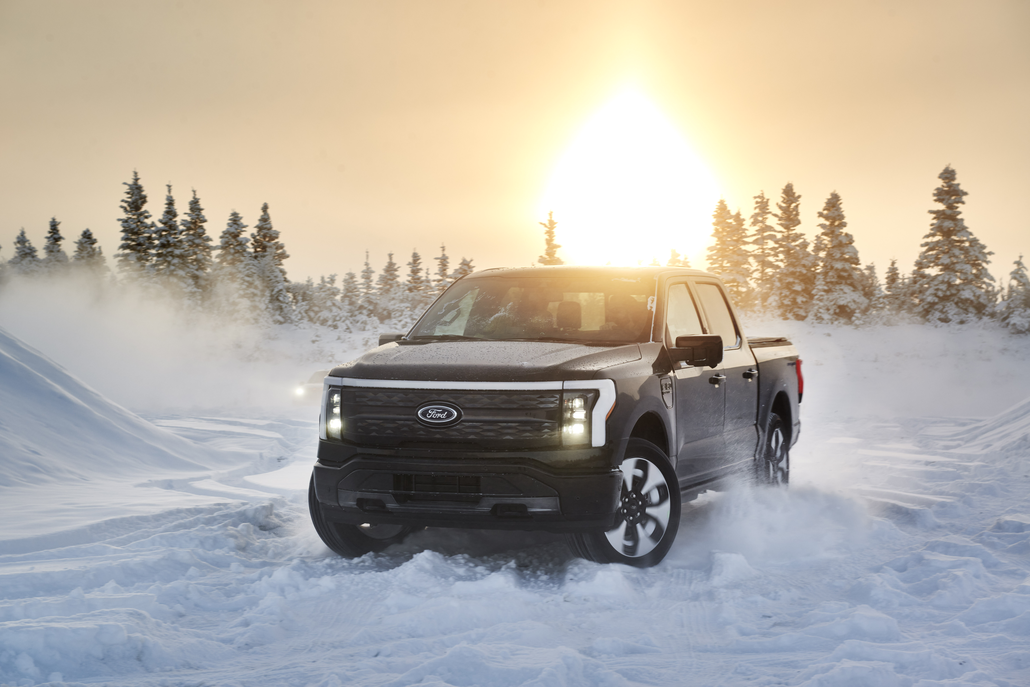
When Ford introduced the F-150 Lightning, no one could believe that such a vehicle really existed. The overall design didn’t change, and there was no radical departure from its overall functionality. Customers loved how familiar they were with an F-150, only electrified. There was even a bit of a fight between Ford CEO Jim Farley and Tesla CEO Elon Musk over which company would be the first to bring its all-electric pickup truck to market. Spoiler alert: Ford won. Meet The F-150 Lightning The F-150 Lightning features dual-emotors with all-wheel drive and comes in two different flavors: a standard range and an extended range battery pack. The standard range Lightning has a 98 kWh battery that produces 452 horsepower and 755 lb-ft of torque, while the extended range models have a 131 kWh battery with 580 horsepower and 775 torque. Trims, Pricing, And Range Customers can choose from four different trim levels: XLT, Flash, Lariat, and Platinum. The base trim starts at just $65,090, with the top-line Platinum starting from $88,085. The XLT and Flash trim levels have a driving range of 240 miles, while the Lariat has 320 miles, and the Platinum can drive 300 miles. Meet The Tesla The Tesla Cybertruck is the latest hotness that everyone’s talking about. However, how does it really stack up? With such an odd and unique design, are customers able to utilize the Cybertruck as a real truck? Buyers who have recently gotten their trucks have received the Foundation series, which features a dual-motor all-wheel drive setup with 600 horsepower and 525 lb-ft of torque. Stepping up to the Beast trim gets you a tri-motor Cybertruck with 834 horsepower and 740 lb-ft of torque. Towing Capacity, Range, And Price Tesla says the truck can tow a maximum of 11,000 lbs. However, there have been reports of people being frustrated when towing with the Cybertruck due to the range being exhausted very quickly. Many owners have also remarked on how easy it is to mark up the stainless steel panels. Some have stated that it isn’t a serious truck but more of a vehicle that can do light-duty truck things from time to time. The two trim levels are able to achieve 318 and 301 miles of driving range, respectively. Dual motor Cybertrucks have a base price of $99,990, while the Beast has a base MSRP of $119.900. A Tale of Two Frunks The Tesla’s bed length is slightly longer at 6 feet compared to 5’5” on the Lightning. However, because of the odd way the Cybertruck’s bed is shaped, they can both hold about the same amount of stuff. The Ford really shows how brilliant it was to turn a standard gas-powered vehicle into a dedicated EV when you get to the frunk. A space that once held an entire engine is now free to give owners 14.1 cu.ft. of space, the same space as a small or midsize sedan’s trunk. In fact, that is actually bigger than the 12.6 cu.ft. of trunk space in the Mercedes-Benz C-Class. The Tesla only gives customers 7.1 cu.ft. A BIG Price Difference The Tesla Cybertruck can tow 1,000 lbs more, but the Ford is a lot less expensive. Without any options, the base model Tesla is nearly $35,000 more expensive than the base XLT F-150 Lightning. Even when talking about the top-of-the-line Platinum, it still is a savings of almost $12,000. Oh, and the Lightning can use Tesla Superchargers with an adapter. Edmunds Compared The Ford And The Tesla In a recent test by Edmunds.com that compared the Ford, Tesla, and the Rivian R1T, the team voted the F-150 as the best of all EV trucks and said that in the comparison, it is by far the best at being a pickup with truck usability. That’s precisely why Ben Westby chose the Lightning to own while living off the grid with his family. With 9.6 kW of Ford Pro Power Onboard, owners can easily charge lawnmower batteries, use power tools, operate a mobile business, or even just have fun tailgating with the knowledge that you can power it all from your truck and then drive home afterward. Ford Blue Cruise Doesn’t Lie Where Tesla has gotten in trouble is the marketing around FSD, or Full Self Driving. The claim that the vehicles are self-driving has proven false, and the company has had to change how it defines the feature. Ford, on the other hand, has had great success with Blue Cruise, their hands-free advanced driver assistance system. With over 130,000 miles of roads mapped around the United States, buyers who were skeptical of taking their hands off the steering wheel are now full believers. Driving in traffic and on the highway has never been easier to live with. At Benna Ford, we offer our customers some of the best prices and services. With more than 100 new and used vehicles to choose from, our outstanding sales team and finance department will work hard to make sure you drive away happy. Our fantastic service department will take care of your new-to-you vehicle as if it were their own.

2023 Ford Super Duty F-250 XL STX Appearance Package_02_converted

KBB compares the Ford Super Duty to the Chevy Silverado 2500HD

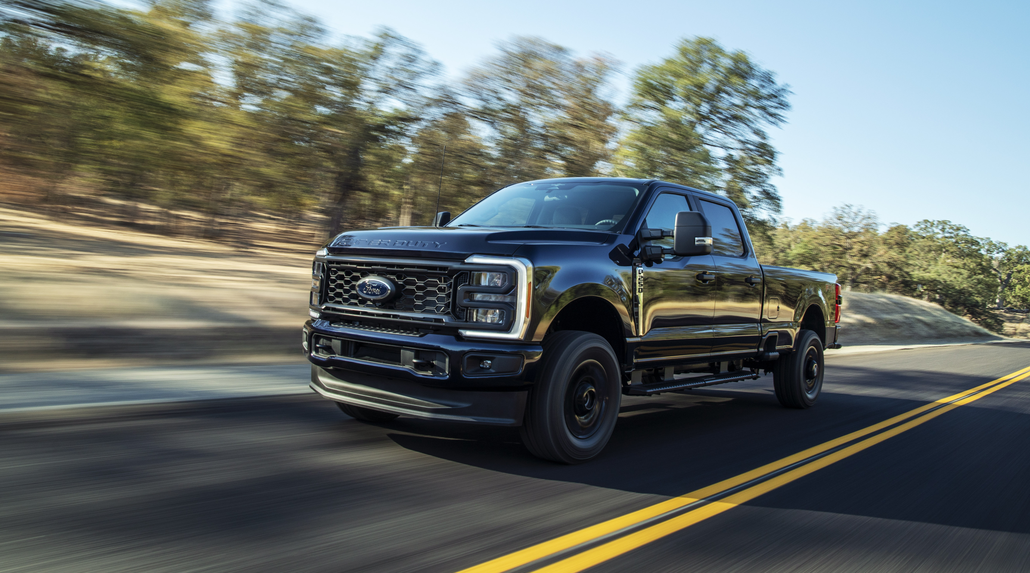
A significant percentage of full-size pickup trucks may have become “lifestyle” or family vehicles, but heavy-duty trucks are meant for work. They can still be plush inside because even a hard-working tradesman appreciates a bit of comfort, but underneath, they are all about heavy payloads and/or towing large trailers. Kelley Blue Book ( KBB) did a quick comparison of the Ford F-250 Super Duty and Chevrolet Silverado 2500 HD, and Benna Ford gives you the highlights. Powertrains The Silverado offers two 6.6-liter engine choices: one gas-powered and the other diesel. The gas-powered engine produces 401 horsepower and 464 lb-ft of torque. The Duramax turbocharged diesel is more powerful on both counts, with 470 horsepower and 975 lb-ft of torque. Both engines are connected to a 10-speed automatic transmission. WT, Custom, LT, and LTZ models have standard rear-wheel drive with 4-wheel drive as an option. ZR2 and High Country models are 4WD only. The Super Duty doubles the number of powertrain options with two gas engines and two turbo-diesel engines. The entry engine is a 6.8-liter V8 producing 405 horsepower and 445 lb-ft of torque. The 7.3-liter V8 is a step up for the gas engines. It is the most powerful gas V8 in the class, with 430 horsepower and 485 lb-ft of torque. The Super Duty also offers two turbo-diesel engines, though both have a displacement of 6.7 liters. The 6.7L Power Stroke features 475 hp and 1,050 lb-ft of torque. Note that none of the Chevy engines reach four figures in torque. The High Output version of the same engine produces a massive 500 horsepower and a class-leading 1,200 lb-ft of torque. All four engines are connected to essentially the same 10-speed automatic as the Silverado, which Ford and Chevy developed together. Each transmission varies slightly according to the engine it is attached to. RWD is standard, with 4WD optionally available. Body Configuration The Silverado is available with a regular 2-door cab, a Double cab with a second seat and pair of doors, and a proper 4-door crew cab. Bed choices are 6’ 8” and 8’ long. The Regular and Crew Cabs are only available with the long bed, while the Double Cab is available with either. The Ford Super Duty is also available in three cab sizes. Like the Silverado, the regular cab has two doors and can seat three with a bench seat. The Super Cab remains a 2-door but extends the cab for a second bench seat or extra cabin storage. The Crew Cab is a full 4-door model. The two bed sizes match those of the Silverado at 6’8” and 8’. The Regular Cab is only available with a long bed while the two other cabs offer a choice. Towing Capacity Towing capacities vary significantly by engine, axle ratios, cabin, and drivetrain. We won’t list them all, but on the Silverado, they range from 14,500 - 16,000 pounds for the gas engine and can go as high as 22,500 pounds with the Duramax diesel with a gooseneck or fifth-wheel hitch. The Ford F-250 with the 6.8 V8 ranges from a low of 13,800 pounds with a 4x4 Crew Cab and long bed to 17,300 on a 4x2 Regular Cab with the short bed. With the 7.3-liter V8, the range is from 16,200 to 18,200 pounds. The 6.7 turbo diesel ranges from 15,500 with 4x2, the big cab and long bed, to 22,000 lb. with the SuperCab and long bed. Finally, there is the 6.7-liter High Output Turbo diesel, the range of which is as low as 18,200 in multiple configurations and rises to 22,000 in various configurations. Special Features KBB calls out some specific special features for each model line. The Silverado is available with the Multi-flex tailgate, which can be configured in six different ways for various cargo and loading needs. There are also off-road-focused ZR2 models, which are big things to throw around the rocks and streams but are certainly strong. The Ford Super Duty is recognized for its more practical and work-oriented features. They start with the Pro Power Onboard 2-kilowatt electrical system with multiple outlets, which enables it to power lights or power tools—a feature the Silverado does not offer. The tailgate-down rear camera is also given a shout-out, along with the onboard scales, which inform you of vehicle payload on the spot. KBB recognizes that many heavy-duty trucks are bought by experienced pickup truck owners who often select out of brand loyalty. That said, they give the nod to the Ford Super Duty due to its edge in practical technology. The Superior, Wisconsin area is full of people doing hard work, and thus, there is a generous supply of Super Duty trucks on hand at Benna Ford for you to see how well they will work with your needs.

Man Helping a Woman out of a Ford Expedition Parked Side View Next to a City Curb

Comparing the Ford Expedition to the Chevy Suburban

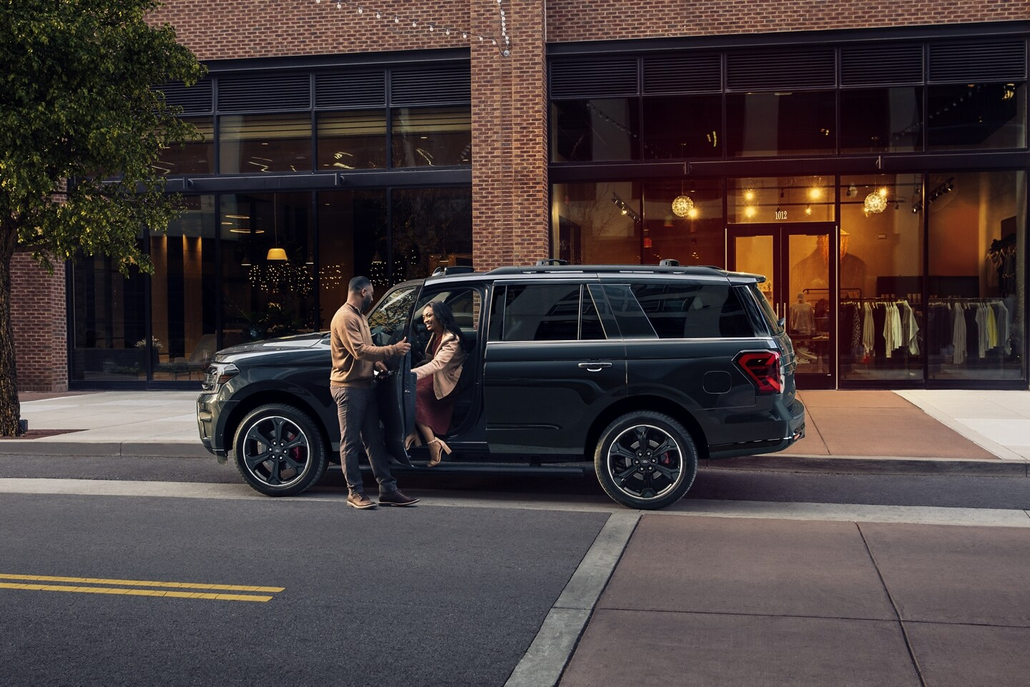
When it comes to full-size SUVs, the biggest players in every sense of the word are the Ford Expedition and Chevrolet Suburban. Both of these vehicles offer the promise of seemingly limitless capability. They can carry large quantities of family and friends and their stuff, tow big toys, and, with available 4WD, plow through snow-covered and unpaved roads without a care in the world. Benna Ford compares these two big boys. Size Starting with these model’s obvious attributes, the Suburban is clearly much larger. Fifteen inches shorter, the Expedition is actually closer to the Chevrolet Tahoe in size, while the stretched Expedition MAX approaches the Suburban’s length, though it is still 3.8 inches shorter. The Suburban’s size means that it will not fit into many single-family home garages. The Expedition XL is a five-seater, but all other trims have a third row to seat eight. Most Suburbans also seat eight, though there is a seldom-ordered option to replace the front bucket seats with a bench for a total seating capacity of nine. While the Expedition MAX closes the gap, the Suburban still has greater cargo space: Cargo Space (cubic feet) Behind: 3rd row 2nd row 1st row Expedition 19.3 53.6 104.6 Expedition MAX 34.3 79.6 121.5 Suburban 41.5 93.8 144.7 The difference is diminished when it comes to passenger space. The Expedition and the MAX have the same passenger space, and when comparing legroom against the Suburban, both 2nd-row and 3rd-row legroom differs by about half an inch. Drivetrains The Expedition counters with more modern engines. The Suburban offers 5.3-liter and 6.2-liter V8 engines as well as a V6 Duramax Turbodiesel. Generally, each Suburban trim offers two of the three engine choices. All Expeditions are powered by a 3.5-liter twin-turbo V6 in three available states of tune, which are determined by the trim level. V8 power may seem as American as apple pie, but the turbocharged V6s are the stars in this group. Expedition 3.5L Twin-Turbo V6 Horsepower Torque (lb-ft) XL, XLT, STX 380 @ 5,000 470 @ 2,250 Limited, King Ranch, Platinum 400 @ 5,000 480 @ 2,250 Limited Stealth Performance, Timberline 440 @ 5,000 510 @ 2,250 Suburban 5.3L V8 355 @ 5600 383 @ 4100 6.2L V8 420 @ 5600 460 @ 4100 3.0 Turbo Diesel V6 277 @ 3750 460 @1500 As seen above, the base engine of the Expedition has significantly more horsepower than the base Suburban engine. Its torque is greater than all available Suburban engines, including the diesel. Higher-tune Expedition engines increase the torque differences. At the same time, the Expedition provides greater fuel economy than both Suburban V8 engines. As the Superior, WI area is very much 4x4 country, the 4X4 figures are shown: Expedition 3.5L Twin-Turbo V6 EPA city/hwy/comb. mpg XL, XLT, STX (4x4) 16 / 22 / 18 Limited, King Ranch, Platinum (4x4) 16 / 22 / 18 Limited Stealth Performance, Timberline (4x4) 16 / 19 / 17 Suburban 5.3L V8 (4x4) 15 / 18 / 16 6.2L V8 (4x4) 14 / 18 / 16 3.0L Turbodiesel V6 (4x4) 20 / 26 / 22 The Suburban’s diesel engine has the best mileage of all, though this is somewhat mitigated by the higher price of diesel fuel. The greater torque of the Expedition engines contributes to greater towing capacity. Again, focusing on 4X4 models, the Expedition has a maximum towing capacity of 9,200 lbs., dropping to 9,000 lbs. for the MAX model. By contrast, the maximum towing capacity for a 4x4 Suburban is 8,000 lbs. with the 5.3L V8, 7,900 lbs. with the 6.2L V8, and 7,800 lbs. with the diesel engine. Interior and Technology Both models range from basic accommodations with cloth seats to absolute indulgence bathed in soft leather. For the Suburban, which starts at $64,195 with 4WD, basic accommodations include an 8-inch infotainment screen bumping up to 10-inch for the rest of the model line, analog gauges with a 4.2-inch information screen, a 6-speaker audio system, 10-way power front seats, and tri-zone climate control. The Expedition starts at $57,660 for an XL STX with 4WD, though that only includes seating for five. The 8-passenger XLT with 4WD starts at $62,635, and the MAX version starts at $65,695. All three come standard with a 12-inch center screen, beating the largest on the Suburban. Also standard are 8-way power front seats, tri-zone climate control on XLT, analog gauges with an 8-inch information screen, and power-folding 3rd-row seats. A very large 15.5-inch center screen that can be seen throughout the cabin is an option on upper trim levels. At the top of each model line, along with soft leather, panoramic roofs, and 360-degree camera systems, the Suburban High Country offers a 10-speaker Bose ® Surround Sound audio system. Still, the Expedition outclasses it with a standard 22-speaker Bang & Olufsen surround sound system on King Rang and Platinum models. Safety and Driver Assistance The Suburban and Expedition both carry standard automatic emergency braking, active lane control, and automatic high beams. The Expedition also has a standard blind-spot monitor, which you can use on vehicles of this size. The Expedition has an Overall 5-star rating from the NHTSA, including 5-star ratings for all impact tests. The Suburban has a 4-star overall rating, scoring less on frontal crash and rollover tests.  At the top of the model range, both models offer a hands-free highway driving system based on pre-mapped roads. For North America, GM claims over 400,000 highway miles for its Super Cruise, while Ford’s Blue Cruise claims coverage of 97% percent of controlled access highways. Either will probably be suitable for your long trips. Super Cruise does have automatic lane change, which Blue Cruise lacks. Expedition is a Winner Both models have their strengths. The Suburban is bigger, but the Expedition really stands out with better powertrains, gas efficiency, greater towing capacity, big touchscreens, and better safety scores. Take a closer look at the Expedition and Expedition MAX at Benna Ford in Superior, Wisconsin.

2023 Bronco Sport Heritage Edition_Robin's Egg Blue_01_converted

Comparing Bronco Sport Against the Toyota RAV4

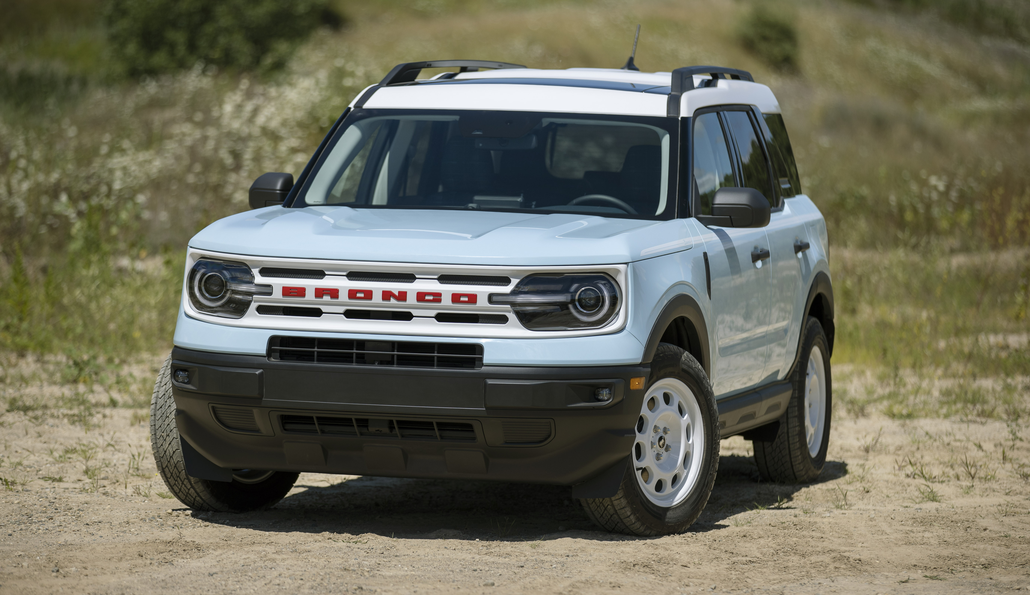
The Compact Crossover category is huge. It is the best-selling vehicle category in the U.S. and has entrants from almost any manufacturer, barring a few European exotics. It is also big enough for Ford to have not one, but two different models competing within it. The Ford Escape handles typical crossover duty, while the Bronco Sport is decidedly more off-road-focused. As the best seller in the best-selling category, the RAV4 is an obvious and strong competitor. The more natural comparison would pit the RAV4 against the Escape. They share a middle-of-the-segment priority, and both come in conventional, hybrid, and plug-in hybrid versions. However, the RAV4 has a couple more off-road-focused trims, and with that, it is stepping into Bronco Sport territory. Benna Ford takes a look at how these vehicles compare. Both model lines start at a little under $30K. The RAV4 has a lower starting MSRP, but that is for a front-wheel drive model, while the Bronco Sport has standard all-wheel drive (AWD). Since most in this area opt for AWD, the starting price difference is negligible. Both model lines top out at about $38K and change. It just so happens that the top RAV4 model is the TRD Off-Road, which is intended to share the same territory as the Bronco Sport as a crossover with heightened off-road capability. Priorities are Clear From the Beginning The differences are very clear at the base level where the Bronco Sport Big Bend leaps into its adventure mission with standard AWD with a Terrain Management System with five G.O.A.T. (Goes Over Any Type of Terrain) modes: Eco, Normal, Sport Sand, and Slippery. The cabin has easy-to-clean rubberized floor mats, MOLLE (MOdular Light-weight Load-carrying Equipment) straps on the seatbacks, and a safari-style roof with a roof rack that can handle up to 150 lbs. The cloth seats are also designed to be easy to clean. There is even a bottle opener built into the tailgate. At the same time, this base model is ready for the civilized road with automatic climate control, a full set of safety and driver assist technologies, including blind spot monitor and rear cross-traffic alert, smartphone compatibility, and an 8-inch touch screen with SYNC ® operating system. Cabin Features The base RAV4 LE is much more conventional in its specifications, with most off-road hardware saved for specific grades. It, too, has an 8-inch touchscreen, and Apple and Android compatibility is wireless. The seats are cloth-trimmed, and the floors are carpeted. The available AWD system features Multi-Terrain Select (MTS) with four modes (MUD & SAND, ROCK & DIRT, SNOW, an d NORMAL). A roof rack is not standard. The Bronco Sport’s 105-inch wheelbase is an inch shorter than the RAV4’s, but its overall length is a full eight inches shorter, making it easier to navigate tight areas off-road. For base models, the RAV4’s 8.4-inch ground clearance exceeds the Bronco Sport’s 7.8-inch. On each model line’s most off-road focused model, the Bronco Sport Badlands and RAV4 TRD Off-Road, the ground clearance is 8.6 inches. The Bronco’s shorter wheelbase and much shorter overall length leads to much better approach, breakover, and departure angles. The greater length does give the RAV4 greater cargo-carrying capacity, at 38 cubic feet to the Bronco Sport’s 33, with the rear seat up and 70 vs. 65 cubic feet with the seat backs down. The Bronco counters with greater cargo flexibility in the way of cargo shelves, bins, pockets, and tie-downs. The RAV4 has an inch more rear legroom in the cabin but falls two inches short on headroom for both front and rear occupants. Powertrains The Base Bronco Sport powertrain is a 1.5-liter turbocharged inline-3 with 181 hp and 190 lb-ft of torque. The engine is paired with an 8-speed automatic transmission before sending power to all four wheels. The range-topping Badlands model upgrades to a 2.0-liter turbocharged inline-4, producing 250 horsepower and 277 lb-ft of torque. The 8-speed transmission is retained, but the 4x4 system has been upgraded with a twin-clutch system in the rear that can transfer power to each side as needed to significantly enhance traction. Mud/Ruts and Rock Crowl G.O.A.T. modes are added. Skid plates, all-terrain tires, and hill descent control, which is like a slow-speed cruise control when descending on rough terrain, are all available and make the Bronco Sport a very adept off-roader. The RAV4 base engine is a 2.5-liter normally aspirated inline-4 that produces 203 horsepower and 184 lb-ft of torque, which is also paired with an 8-speed automatic transmission. The TRD OFF-Road model, which compares most closely to the Bronco Sport Badlands, retains the base powertrain. The AWD system adds Downhill Assist Control, which functions similarly to the Bronco Sport’s Hill Descent Control. The RAV4 does have hybrid models with more power, but there is no hybrid equivalent of the TRD Off-Road. Safety Ratings Both the Bronco Sport and RAV4 earned Overall 5-Star ratings from the NHTSA. The Bronco Sport also earned a TOP SAFETY PICK + award from the IIHS, which is their highest rating, while the RAV4 was rated one step down as a TOP SAFETY PICK. In the final analysis, it is clear that each model has its advantages, but if you plan on taking your vehicle off the pavement, the Bronco stands out as the clear winner. It was simply designed for that role at the outset, unlike the RAV4. If you plan to stay on the pavement, there is the Escape to consider. Either way, you will want to see them for yourself at Benna Ford, where you will find a generous inventory of each to explore.

Contact Us

Fill out this form below and we'll contact you shortly
*Required Fields