
Blog / History

Blog

All History Information News Innovation New Vehicles Ford Ford Performance F-150 Service Technology Bronco Awards Mustang Ford EVs F-150 Lightning Features Maverick Ranger Escape Safety Electric Vehicles Comparisons Expedition Mustang Mach-E Racing Mach-E Raptor Super Duty Deals Explorer Lifestyle Transit Events F-Series Specs Tips Benna Ford Toy Store F-150 Raptor R Mustang GTD Roush Tuscany Used Vehicles BlueCruise Deals Offers and Specials F-150 Tremor FordPass Rewards Formula 1 Mustang GT3 Rousch Shelby Warranties
2025 Ford Maverick Lobo_02_converted

2025 Ford Maverick Lobo Marks The Return of The Street Truck

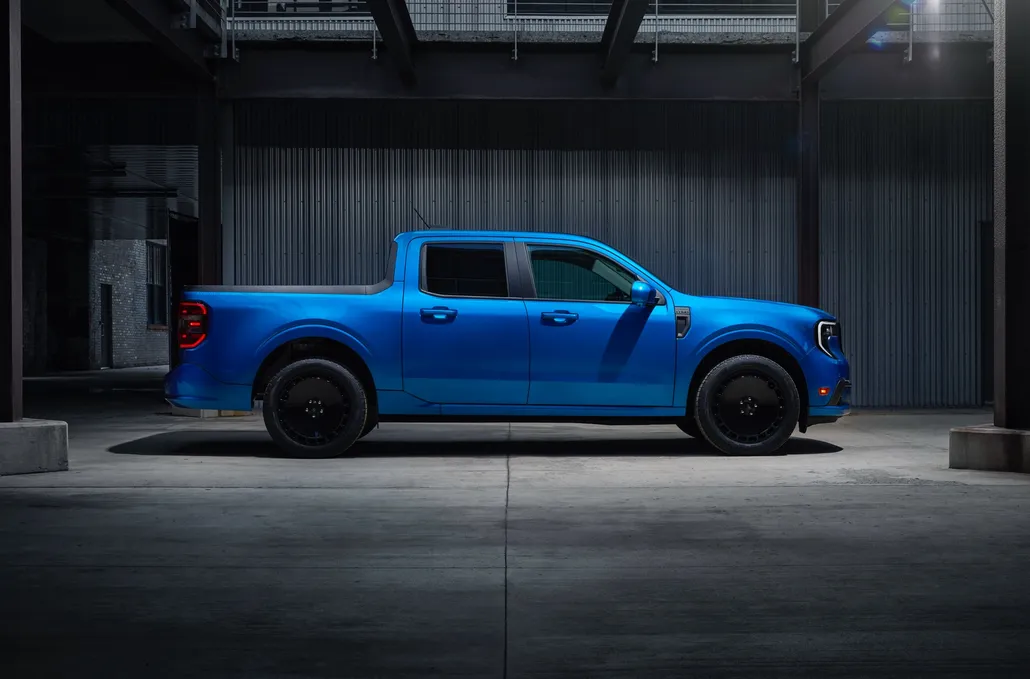
Back in the day – about 40 years ago - street trucks were the rage. They gave pickup truck owners a way to customize their trucks by adding body kits, fatter tires, and cool color schemes. Some even added more power to their engines – or dropped something that was beyond capacity. The creativity that went into these trucks was off the scale. They were low, but not slow. These were the stuff that dreams were made of. Over the years, Ford had a few “street trucks” that came from the factory. That tradition has been revived with the 2025 Ford Maverick Lobo. Taking our segment-busting compact pickup truck into a cool ride came from the inspiration that some Maverick owners were doing. They transformed their Mavericks into street trucks from scratch. Ford saw what they created and worked on the 2025 Maverick to present something that was factory-made. The 2025 Maverick Lobo starts out as a Tremor with the 2.0-liter EcoBoost driveline with all-wheel drive. From there, they lowered the ride height by a half-inch up front and 1.12 inches at the rear. The result was a roof height that was 0.8 inches lower than a standard Maverick. Next, Ford added on-road tuned suspension and recalibrated the steering. On the driveline, they took a torque-vectoring twin-clutch drive unit from the Bronco Sport to enhance power transfer. The brakes were swapped out for bigger rotors and dual-piston calipers that were originally on the European-market Focus ST. A larger radiator and fan will keep the 2025 Maverick Lobo cool under all conditions. On the electronics side, Ford created a Lobo mode for this performance-oriented 2025 Maverick. When engaged through the drive mode switch, this mode will improve cornering performance, grip, and stability, helping to minimize understeer. However, Ford asks you to not use the Lobo mode on the street – especially around the Twin Ports. If you want to take the 2025 Maverick Lobo onto, say, Brainerd International Raceway for a track day, then flip the switch and see how Lobo mode can change your perception of street trucks. To be a street truck, it must look the part. Ford created alterations to the 2025 Maverick’s revised design by working on aerodynamics with a specific image in mind. That starts with a unique front fascia, painted rear bumper, and rocker moldings. The roof has a contrasting black paint to set off the primary exterior color. A set of 19-inch black aluminum wheels gives it a custom-modified look that finishes the 2025 Maverick Lobo’s aesthetic. Inside the cab, the 2025 Maverick Lobo sets the theme off right. Grabber Blue and Electric Lime accent stitching, along with a graffiti-inspired overprint on the seats give it a look that is inspired by street culture. The Lobo name is also embossed into the black driver and passenger seats. Because street trucks start off with a blank canvas, Ford invites you to make the interior of the 2025 Maverick Lobo your own. There are two themes to choose from: Standard and High. Even though it is a street truck, it is still a 2025 Maverick. You get all of the equipment found on other models, such as a heated steering wheel and seats, Ford Co-Pilot360 2.0 driver-assist technologies, a 360-degree camera, spray-in bedliners, and a moon roof. Yes, you can use the 2025 Maverick Lobo as a tow rig by adding a Pro Trailer Hitch Assist and Pro Trailer Backup Assist after the first of 2025. If you think this is a concept for a street truck, think again. The Lobo will be on sale at Benna Ford along with the rest of the 2025 Maverick lineup. Deliveries will begin in early 2025. Contact us to become one of the first to own this cool truck in the Twin Ports area.
60 Years of the Ford Mustang

Mustang Celebrates 60 Years of Fun Driving

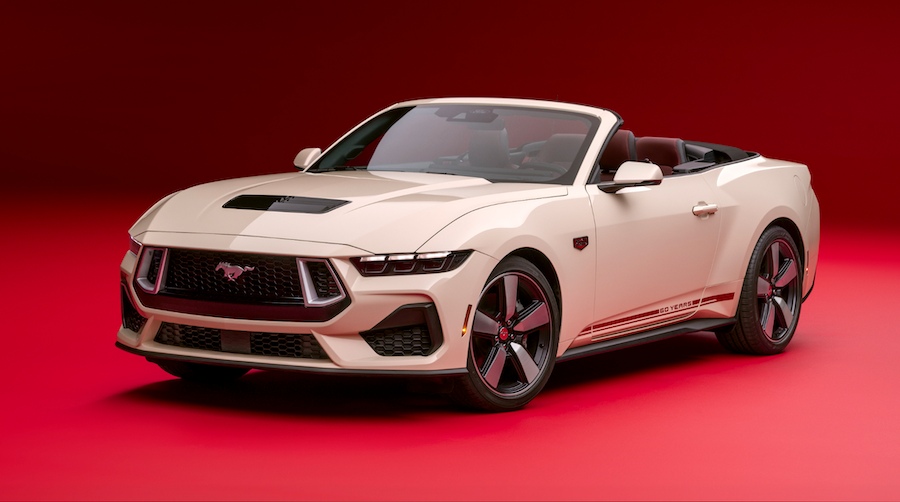
Not many automotive nameplates span a consecutive 60 years, much less something as seemingly ephemeral as a sports coupe.  However, it was 60 years ago, on April 14th, when the public saw the first Mustang on a stand at the Ford Pavilion at the New York World’s Fair. The Mustang went on to set a new sales record for a vehicle in its first year, with over 418,000 models sold. Since then, the Mustang line has continued unbroken through 7 generations. Its shape has varied, but - putting aside the Mach-E for a moment - it was always a 2-door sport coupe with a front engine, rear-wheel drive, and a V-8 among the engine options. Benna Ford has been proud of every Mustang we have watched drive off our lot to an excited customer. Owning a Mustang has never required a lot of money, just a desire for something fun, more personal, a little less practical, and a lot more stylish. Some models have been economical, others blindingly fast. Because fun is at its center, the lineup has always had a convertible. It has become the “all-American sports car” even as its sales spread across six of the seven continents. Mustang Experience Center and Celebration Naturally, Ford has not let this anniversary pass by quietly. It is opening the Mustang Experience Center adjacent to the iconic Charlotte Motor Speedway in Concord, North Carolina. The center will include a Mustang-focused Ford Heritage Gallery, an aftermarket parts shop, a retail store for Mustang merchandise, and the Ford Performance Racing School’s hands-on track instruction, teaching Mustang owners how to best enjoy and harness the performance of their cars. This was the obvious location for the Mustang 60th anniversary celebration on April 17th. Mustang owners came from across the country and even around the world to compare their rides, ride along drifting Mustangs on the Charlotte track, and simply celebrate all things Mustang. Limited Edition Anniversary Package Here, Ford revealed its 60th-anniversary Package, a limited-production model, with only 1,965 being built. Naturally available in red, white, and blue, the package brings back subtle reminders of the first Mustang that blend in with what the Mustang has become.  It starts with rocker panel stripes that recall the first-generation model’s “racing stripes.”  20-inch 5-spoke wheels combine a machine finish with Dark Gravity Gray and feature stamped galloping Mustang center caps inspired by those on the 1965 model.  The grille mesh recalls that on the original model with silver-finish nostrils that feed air into the 5.0-liter V8 and the iconic galloping Mustang badge in the center. Impossible to do in 1965, the new Mustang has headlights that echo the triple-themed taillights that have long been a Mustang design element. Smoked headlight housings accentuate these lights on the 60th Anniversary Package. Race Red and Vapor Blue models are fitted with silver side mirror caps as a callback to the chrome mirror housings of the original. Ford Mustang Global Gallop Finally, to celebrate the Mustang’s global presence, the Ford Mustang Global Gallop will lend 7th generation Mustangs and Mustang Mach E’s to 60 journalists, content creators, and Mustang ambassadors from around the world with the simple instruction to drive someplace cool and tell of the experience. The Mustang experience has always been about driving for the sheer fun of it. Benna Ford is proud to have played a small part in the Mustang’s journey. That's why we sell not only the Mustang and Mustang Mach-E but also high-performance Mustang models from Shelby American Inc., whose founder started modifying Mustangs 60 years ago. Visit Benna Ford to start your own Mustang experience.

1694528410564_converted

Ford’s Pro Access Is the Latest in 100 Years of Ford Tailgates

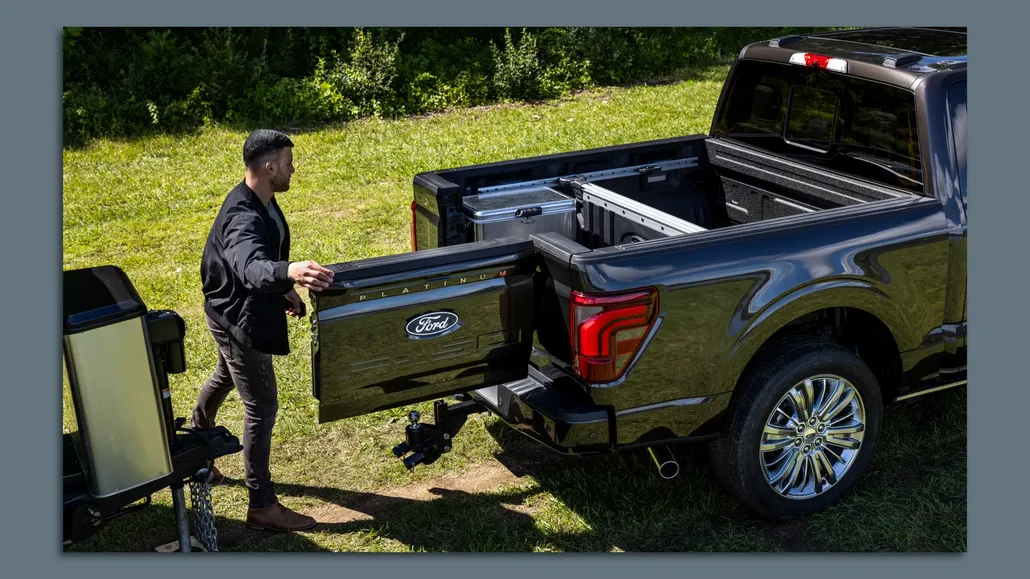
Available on the F-150 Lariat and Tremor and standard on King Ranch and Platinum, Ford’s Pro Access Tailgate is the latest in tailgate design. A visit to Benna Ford will quickly demonstrate how its side-swinging door within the traditional tailgate promises to solve some problems that have long plagued traditional tailgate design. It is also the latest in Ford’s long tradition of tailgate innovation. The Basics Were Set in 1927 The basic form of the tailgate has changed little since the 1927 Model A Wagon and truck. It was the width of the cargo area, bottom hinged with supports on either side that held it to a horizontal position when lowered. Initially, those supports were simply chains. They hung in a loop when the tailgate was up and bounced against the inner walls. In 1964, Ford replaced the chains with hinged metal bars that folded within the tailgate sides and stayed quietly in place. How the Tailgate Both Provides and Hinders Access One issue with the standard tailgate design is that an open tailgate keeps one away from the load in the bed, making it more challenging to position items in the bed, make adjustments, and reach for things to unload. In 1980, Ford combatted this with the easily removable tailgate. Though a bit cumbersome, the removed tailgate did allow a person much easier access to loading and unloading the bed. Interestingly, Ford developed a precursor to the Pro Access in 1966 on its full-size station wagons with a feature called the Magic Doorgate. An available feature at the time was seats on each side of the cargo area, each of which could fit one adult or two children. To prevent those passengers from having to crawl over the tailgate to get in and out, Ford created the Magic Doorgate, in which the full tailgate opened to the side and down. As this was for passenger accommodation, Ford did not extend this feature to its pickup trucks. The 2000s Provided an Explosion of Tailgate Ideas In the mid-2000s, Ford showed they paid considerable attention to the tailgate. In another move to improve access to the truck bed in 2006, Ford created a step extension for the King Ranch model. This would drop down at a height approximately halfway between the lowered bed and the ground and out a bit to help you step into the cargo bed. The following year, they showed a Pickup concept in which the entire tailgate would power downward horizontally to both act as a step and give the operator access to the bed while standing on the gate. It never went into production. In 2008, however, Ford addressed the issue of using the tailgate as an extension of the bed but subsequently leaving the rear open. Available on Super Duty trucks, the Bed Extender was a three-sided cage that could rotate out to create an enclosure on top of the extended gate for long loads. When not needed, the extender would rotate inside to divide the cargo bed or collapse out of the way.  In 2021, Ford used the bedliner composite molding on the tailgate to create an on-site workbench with a built-in yardstick, grooves for pencil holders, and other clever shapes to assist working. Ford’s Pro Access is the Best Tailgate Innovation Yet Ford’s latest and most comprehensive innovation is the Pro Access tailgate.  Here, the middle 60% of the tailgate, or 37 inches, is hinged on the passenger side to swing out of the way to give you access to the cargo bed. The swing-out gate has check-stops at 37, 70, and 100 degrees. The first check stop addresses a long-term issue with traditional tailgates when towing, in which a trailer jack hampers the ability to lower the tailgate. The 37-degree check is designed to stop just short of the trailer jack to give the operator bed access. When there is no trailer, the 70-degree stop provides easier access while still remaining within easy reach to close.  Opening it 100 degrees gets it completely out of the way for unloading. A wider kick step on the bumper under the license plate provides a convenient step for entering the cargo bed area. That the Pro Access hardware adds 62 pounds to the tailgate weight is not an issue because every Pro Access tailgate comes standard with power raising and lowering. By contrast, GM’s Multi-flex tailgate does not address the trailer jack issue, and Ram’s 60/40 side swinging tailgate adds 75 pounds and has no power function. The Pro Access tailgate is both the latest in Ford’s long history of tailgate innovation and just an example of the clever, user-based thinking that Ford puts into all of its trucks. Take a look at the best and best-selling trucks in the U.S. at Benna Ford.

Ford Baja 1000 Racing Vehicles the Bronco Raptor and F-150 Raptor R

Bronco Raptor and F-150 Raptor R lead the way in the stock classes

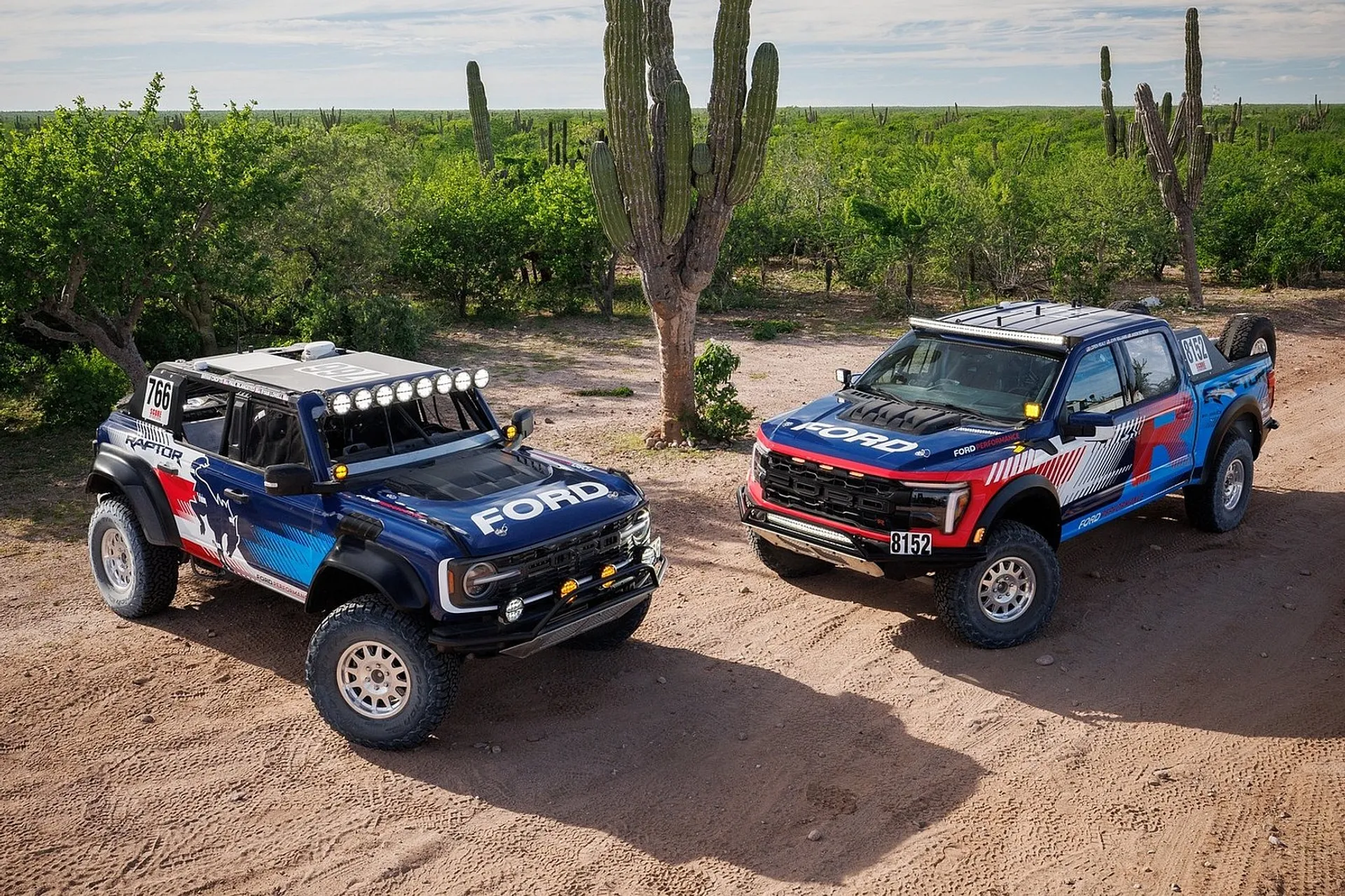
Ford has a long history racing the Baja 1000. The legacy dates all the way back to 1968, when the first Ford Bronco entered and won with Hall of Fame off-roader and pioneer Larry Minor and Jack Bayer. Larry Minor with Rod Hall would win again in a Bronco in 1969. Rod Hall owns the Guinness World Record for the most class wins in Baja history with 25. Rod would win his final race in 2017 at the age of 79. Then, another legendary racing driver, Parnelli Jones, of both off-road and road course racing fame, won in ‘71 and ‘72 with Bill Stroppe in a Ford Bronco. Robby Gordon would later win with a prepped Ford F-150 in 1989. Overall Victories The manufacturer has 23 overall victories at the famed off-roading event, and was absolutely dominant in various classes in the 1990s with their Rough Riders program. Legend In The Making In 2008, Ford took an F-150 and took third place in class 8 racing at the Baja 1000, and it was later revealed during its official launch that it was basically a stock Ford F-150 Raptor that went racing without people knowing. Ever since that ‘08 race, the company has taken great pride in bringing their engines, chassis, brakes, and suspension developments for their trucks and SUVs to the Baja 1000 for the ultimate torture testing. Success Year After Year This year, 2023, was no different. The Ford Bronco Raptor and F-150 Raptor R both won their stock classes at this year’s event. The Bronco Raptor won the same event that the Ranger Raptor won last year, the stock mid-size class. “Ford is a family company with not only a goal to win, but to also further develop our street Raptors for customers around the world to enjoy,” said Mark Rushbrook, global director, Ford Performance Motorsports. “The Baja 1000 not only served as a testament to all the hard work from people on the ground and those in Dearborn, Mich., but this event also emphasizes our continued global commitment to the sport and making better products for our customers.” Drivers & Final Times Driving the brand new Bronco Raptor was Brad Lovell, a 2022 Off-Road Motorsports Hall of Fame inductee, and he would take the checkered flag after a grueling 1,200 miles in just 40:37:47.820. The F-150 Raptor R was driven by Loren Healy, an off-road racing champion in both the Baja 1000 and multiple other off-road racing series. He would cross the line in only 41:44:45.634. Engines The Bronco Raptor is powered by a 3.0-liter EcoBoost V6 with 418 horsepower and 440 lb-ft of torque. The F-150 Raptor R has a 5.2-liter supercharged V8 that puts out 700 horsepower and 640 lb-ft of torque. Both vehicles use a 10-speed automatic transmission. “Winning the Baja 1000 in the Raptor R will go down as one of my favorite victories in my racing career,” Loren Healy, Raptor R navigator, said. “The amount of work that went into the race efforts for both the truck and the Bronco Raptor are absolutely mind blowing. Somewhere around 100 people came together as a family and made magic, getting both these stock production vehicles to win their classes in the second longest Baja 1000 ever. It truly is an honor to be a small part of this epic, history-making team.” Leaving Satisfied Both drivers expressed overwhelming satisfaction and joy with not only the final result of the race, but also with the whole Ford Performance team. Both vehicles were basically stock, save for obvious safety changes. The engine, transmission, and driveline were all the same stock parts you would get in a Raptor product sold at Benna Ford or any other Ford dealer. At Benna Ford, we offer our customers some of the best prices and services. With more than 100 new and used vehicles to choose from, our outstanding sales team and finance department will work hard to make sure you drive away happy. And our fantastic service department will take care of your new-to-you vehicle as if it were their own.

Formula One Racing Car catching air on the track

Ford To Return To Formula 1 In 2026

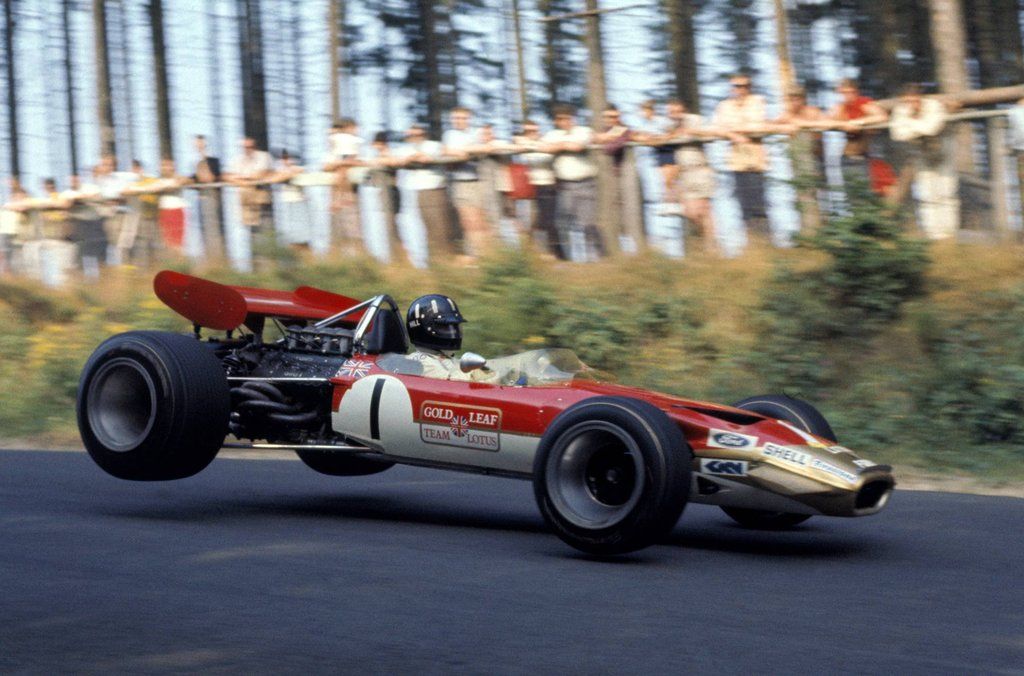
Ford has been a global powerhouse in racing since 1901. Henry Ford, attempting to repair his reputation after a failed attempt at running his first car company, beat an established and accomplished car maker and racing driver, Alexander Winton, in a sweepstakes race in Grosse Pointe, Michigan. Ever since then, Ford has understood the phrase, “Race on Sunday, sell on Monday,” to be true for them. Most people know Ford’s racing success at the 24 Hours of Le Mans with the Ford GT40, re-popularized by the blockbuster film by James Mangold starring Matt Damon and Christian Bale, “Ford v. Ferrari”. However, did you know that Ford were an engine supplier in Formula One from 1967 until 2004? Even more, they are the third-winningest engine manufacturer behind Mercedes-Benz and Ferrari. But something even more wild … to date, they have the most successful engine track record of all time. Racing History Personified In 1967 when Ford debuted their engine called the “Double Four Valve”, or DFV for short, which was a combined partnership between Ford and Cosworth, another famous engine builder. It won the first race it had entered. The Dutch Grand Prix in June of 1967 was won by Jim Clark in a Lotus Ford. From 1967 until 1985, the DFV Ford engine would undergo a few tweaks, but it powered a staggering 155 race wins out of 262 races it entered during that time. Let’s do the math on that quickly: if it entered 262 races, winning 155 of them, that’s an average winning percentage of 59%. In 18 years, it won FIFTY-NINE PERCENT of the time. To give you some perspective, Tom Brady played in the NFL for 22 seasons and has a career-winning percentage of 75%. Hopefully, that gives you a good understanding of how dominant Ford was at that time. Sadly, they’d only go on to win 19 more races between 1986 and 2004. They then sold what was the Jaguar Racing team they powered to Red Bull Racing in 2005. To date, Ford is tied with Mercedes-Benz for powering 13 Formula 1 driver championships. Only Ferrari has more at 15. The first driver to win a championship with a Ford motor was the fantastically mustachioed Graham Hill in 1968 with a Lotus Ford. The last was Michael Schumacher’s first championship in 1994 in a Benetton Ford. Keep in mind Ford had just entered F1 as an engine builder in 1967. To The Future, And Beyond! Starting in 2026, Ford will be coming back to the glory that is F1 to power the Red Bull Racing team, with two-time (so far) world champion driver Max Verstappen, who is contracted to be with the team through 2028. Red Bull Racing has won the Formula One Constructors’ Championship a total of five times, sweeping four years in a row from 2010 to 2013 and then once again in 2019. Red Bull’s drivers have won a total of 6 driver’s championships. Sebastian Vettel won four in a row driving for them from 2010-2013, and now their current hotshoe, Max, has won the last two in a row for 2021 and 2022, with a high likelihood of winning his third championship this year in 2023. In 2021 Red Bull created a new engine manufacturer called Red Bull Powertrains, RBPT, to take over for Honda after they decided to leave Formula 1 as an engine supplier after 2022. From 2026 onwards, it will become Red Bull Ford Powertrains. Benna Ford Benna Ford is excited to bring you updates on our favorite sport, racing! If you have any questions regarding our new or used inventory, contact us today and let one of our expert staff help you. Should your Ford need maintenance or service, use our easy scheduling tool to get your vehicle taken care of the right way!

We_Can_Do_It_NARA_535413_-_Restoration_2

International Women’s Day: Ford’s most Famous Factory Worker

For International Women’s Day on March 8th, Benna Ford takes a moment to recognize the most famous factory worker in Ford’s history; “Rosie the Riveter,” the bandana-wearing, arm-flexing young woman proclaiming “We Can Do It!” who worked in the Ford Willow Run factory in Michigan. She became the symbol of women factory workers across the country who were making the machinery their husbands and brothers would use to win the second World War, and later became an icon of women empowerment. Rose Will Monroe was born in Pulaski County Kentucky in 1920, as one of nine children. After her husband was killed in a car accident, she moved to Michigan with her two young children to take a job at the Willow Run plant that Ford had built to assemble B-24 Liberator bombers. The 332-acre facility was the largest manufacturing operation in the world and employed over 40,000 workers. It produced over 9,000 B-24 Liberators, and by 1944 planes were coming off the line at the rate of one every hour. Moved to Michigan as a Widow and Mother By the time she moved to Michigan, a 1942 song “Rosie the Riveter” was already popular on the radio about a dedicated wartime female factory worker. During the war, actor Walter Pidgeon came to Willow Run to shoot footage for a film promoting the purchase of war bonds. When he found there was an actual woman named Rose working as a riveter there, he asked Monroe to be part of the film. From there Monroe became the face of “Rosie the Riveter” and is the inspiration if not the exact likeness of the famous “We Can Do It” poster. Monroe’s dream at the time was to become a pilot to transport aircraft parts around the country. Unfortunately, her status as a single mother denied her the training. Though she experienced some “Rosie” notoriety after her appearance in the film, she chose not to further capitalize on her fame. After the war, Monroe left the factory and worked as a cab driver, operated a beauty shop, and launched a luxury home construction company known as Rose Builders. Monroe eventually did get her pilot’s license in 1970 and flew until 1978.  Leaving a legacy for women to stand forth, Rosie passed away on May 31, 1997, in Clarksville, Indiana, at the age of 77. "Rosie the Riveter" in its song, film, and poster forms, inspired a social movement that increased the number of working American women from 12 million to 20 million by 1944. In 1942, between the months of January and July, the estimates of the proportion of jobs that would be "acceptable" for women was raised by employers from 29 to 85%, and 4.1 million unmarried women between the ages of 20 and 34 worked in the defense industry The “Rosie” Heritage Of course, most of the women lost their factory and other traditionally “male” jobs after the war, as they were expected to make room and employment opportunities for the returning veterans. Most assumed domestic life or returned to traditionally “female” roles in the workplace. By contrast, the Rosie the Riveter poster has become a feminist symbol as it perfectly encapsulates the fact that women can, in fact, do work once thought to only be within the abilities of men. The proof was undeniable and it provided support for a subsequent generation of women not content with traditional female employment opportunities. The automotive industry has long been male-dominated, but it doesn’t need to be. The present 13 members of the Benna Ford staff all play crucial roles in keeping the business running smoothly, and we are always on the lookout for talented employees of any gender. In the meantime, this March 8th, and we will be looking to “Rosie the Riveter” and all the other women who have inspired us and made history.

gettyimages-1129318310

Recognize Women's Achievements in March

March is Women’s History month and thus a time when we take notice of Women’s achievements, past and present. Men have historically held the seats of political, business, and theological power making the history we all learned male-centered by default. Despite this, it is long overdue that we recognize the stories and efforts of the dedicated women that too often don’t often make it to the history books. Women Keep Benna Ford Running Both at the manufacturer and dealership level, the automotive world has traditionally been seen as a male bastion. But at Benna F ord, over a fourth of our staff are women, and luckily, that number keeps growing. We know that without the women on our staff, Benna Ford would cease to operate. Without Carla Ringold, our advertising wouldn’t go out. Kimberly Hobbs, Billie Suomala, and Tiffany Weideman almost entirely comprise our Business Development Center. The women of Benna Ford keep the office running, get the titles transferred, and see that everyone gets paid. They are key to the operation and success of our store. The Ford Foundation’s Long History of Supporting Women’s Causes We are grateful that the manufacturer of the products we sell, Ford, established the Ford Foundation in 1936. Among its many endeavors, the foundation has been committed to advancing gender equality for nearly 60 years, supporting hundreds of dauntless activists, organizations, and initiatives with more than $3 billion in grants. From the very beginning, the foundation followed the lead of women pioneering the feminist movement in the United States. They later expanded and learned by listening to the women in the trenches in Africa, South Asia, and Latin America as we expanded our support worldwide. They have regularly invested in the ideas, individuals, and institutions on the front lines, so they can carry their work forward and optimize their impact. Thanks to these and other efforts, women's rights have come a long way in the past 50-60 years. Even with these strides, a significant gender income gap remains and more than 2.7 billion women are legally restricted from having the same choice of jobs as men. Much has been accomplished, but it is an ongoing and noble struggle. Even as we hope you visit our Benna Ford dealership to shop for a new or used vehicle or service your existing one, we hope you take some time this month and thereafter to think about the role women have played in our history and look at the goals and efforts of our present women history makers.

EV Charging Port on Ford

How EVs Got Their Start

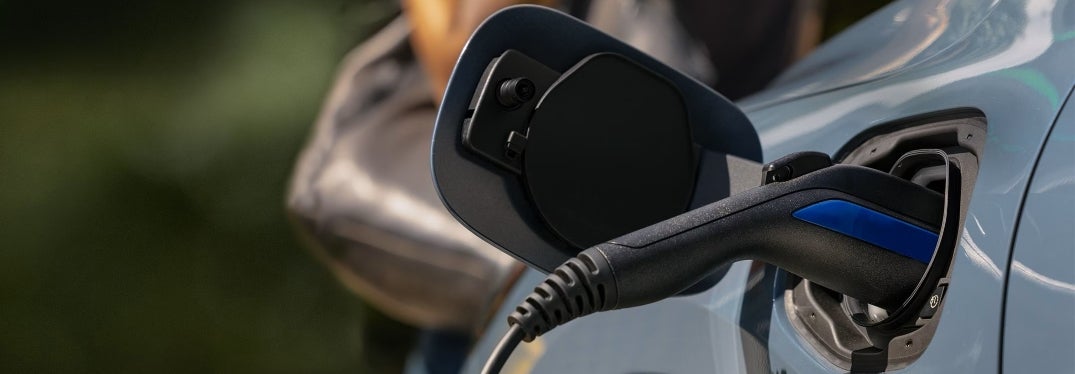
It’s no secret: hybrid and electric vehicles are set to take over the automotive world. More manufacturers like Ford are making the switch and dedicating themselves to a fully electric future within the next several years. But did you ever wonder how electric vehicles got their start? The reality is that they’ve been around for a lot longer than you’d think. Past, Present, and Future Although the past 20+ years have seen a huge surge of electric vehicles, they actually came onto the almost 200 years ago. The early to mid-1800s were the scene of a huge boom in technology and development, and as people looked for new ways to travel conveniently, they saw an opportunity in the invention of the battery. There were several drawbacks, though. For example, batteries in the first electric vehicles were single-use and disposable, and their range was highly impractical. On top of that, early EV speeds topped out under 15 MPH. However, that didn’t stop inventors from trying. Rechargeable batteries came along, but even those could only make it 50 or so miles before requiring another charge. Once the combustion engine was invented and saw mass distribution by the Ford Motor Company, electric vehicles fell by the wayside. Ford’s cars were affordable, practical, and convenient compared to their electric counterparts, and the combustion engine took over. The oil crisis of the 1970s made people look more critically at our fuel consumption, but most attempts at marketing EVs still failed. That is until the late 1990s when the Prius came onto the scene. Finally, electric vehicles became a possibility as drivers saw the convenience of a hybrid engine. Recent developments are happening quickly, with different automakers pledging an electric revolution to fight the climate crisis and reduce our dependence on fossil fuels. Today, there are more options than many ever thought possible. There are traditional hybrid, plug-in hybrid, and fully electric vehicles all across the country, and car makers’ investments are paying off. Options range from affordable family vehicles like the Ford Escape Hybrid to capable trucks, including the Maverick and F-150 Lightning. Even businesses are getting in on it with the availability of the E-Transit Van, saving them money while reducing emissions. This year alone, Ford is adding more electric vehicles to its lineup with plans to go all-electric within the next few years. They’ve also invested billions in bringing EV battery production to the US, creating jobs while impacting the environment. [gallery link="none" columns="2" size="full" ids="411,412"] Find Your Ford EV at Benna Ford Want to get a head start on the electric future? Find your next hybrid or electric vehicle at Benna Ford! New models are arriving, so keep an eye on our inventory and contact us if you see something you’re interested in.

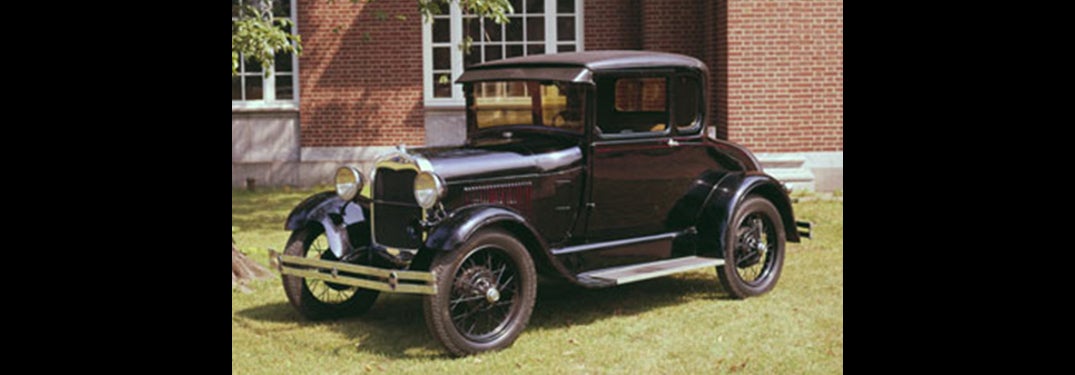
ford model a

Did the Ford Model A Start the Classic Car Restoration Community?

What Was the First Classic Car? These days, there is an extensive community of classic car collectors and restorers, so it can be tough to think of a time when there were no classic cars at all. Of course, cars weren’t always around, and they didn’t come into popular usage until the early 20th century. So, we’ve asked the question, what was the first car that became a “classic car?” more The answer to that question isn’t easy to find, but based on a recent report from MSN, we think it’s fair to say it was the 1928-1931 Ford Model A. Why the Model A? Well, for a number of reasons. There were certainly cars made before the Model A, and therefore, older cars that would have technically become classic models before the Model A ever did. But as MSN details, the Model A was really the model that kickstarted restoration as a hobby. From this, the classic car community was born following WWII. The post-war economic boom in the U.S. would have almost certainly allowed for more people than ever to have the disposable income necessary for such a hobby, and the 1928-1931 model certainly would have been an element of nostalgia to those at the time who would have grown up with such a vehicle. History of the Model A The most iconic of Ford models is arguably the Model T, but the Model A was the vehicle that ushered in a new automotive era for Ford. The last Model T was manufactured in 1927, and for six months, Ford shut down its factories to retool them for Model A production. Though the Model A is seen as a successor to the Model T, it is technically Ford’s first car. The name is indeed a nod to Ford’s first car, the 1903 Model A. The new 1928 model featured a number of key auto advancements, including a safety glass windshield. With the Great Depression beginning in 1929, the Model A couldn’t have been introduced at a worse time. Even so, Ford managed to sell over 5 million Model A cars by 1931. Though we can’t get you behind the wheel of a classic Ford Model A, we can get you behind the wheel of the latest and greatest Ford models. A company that lasts as long as Ford is doing something right, so contact us to experience that today.

Contact Us

Fill out this form below and we'll contact you shortly
*Required Fields