











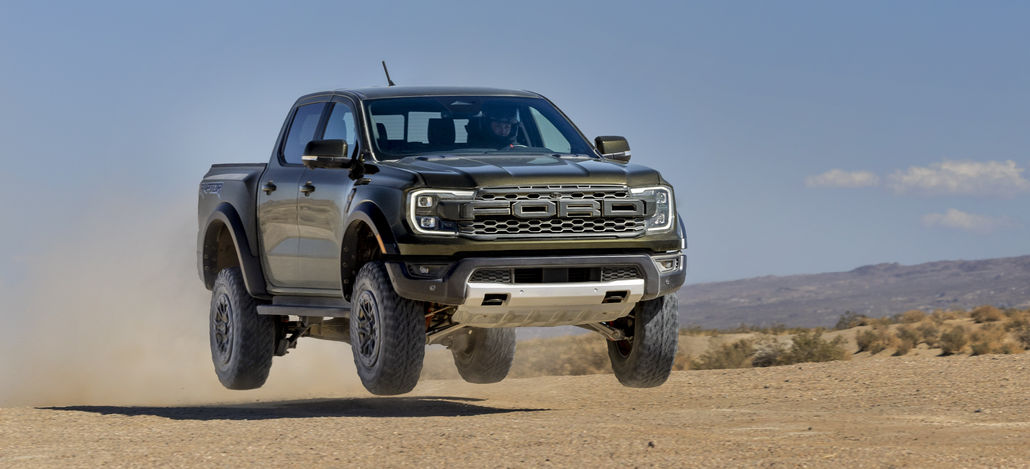
Other markets around the world had a Ranger Raptor available to them for years, but Ford waited for the Ranger redesign to bring the Raptor to its home turf. It is ready to deliver the Raptor experience on a slightly smaller platform than its F-150 sibling, and the Motor1 enthusiast website took it for a spin. This Benna Ford blog post relays the Motor1 driving impression of the new Ranger Raptor.
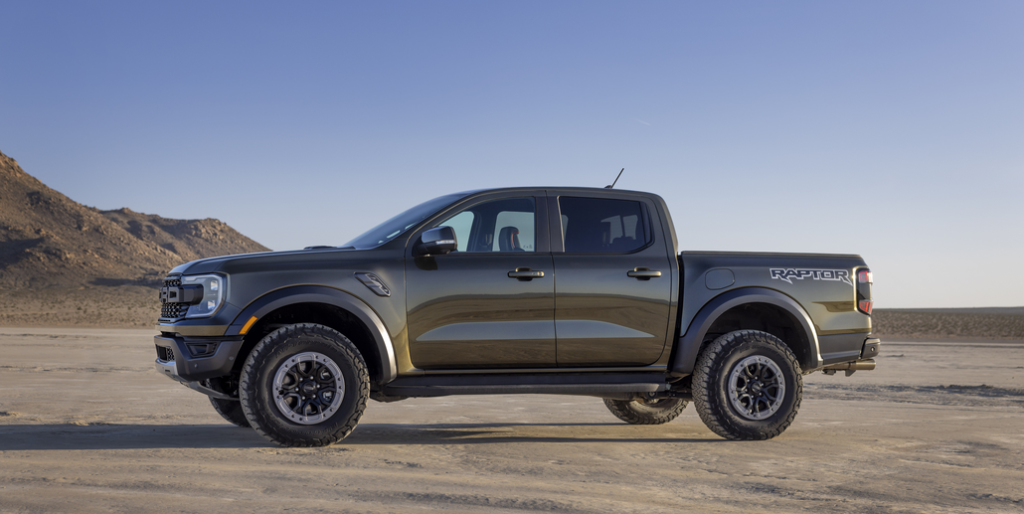
After the Raptor versions of the F-150 and the Bronco, the Raptor formula is fairly well understood. which Motor1 describes as “A heaping dose of power, dune-tuned suspension, the biggest A/Ts that’ll fit under the fenders, and a shot of testosterone to the styling.” The Ranger Raptor is no different. In a segment that is rapidly going to all 4-cylinders, it boasts a 3.0-liter twin-turbo V6 that produces 405 horsepower and 430 lb-ft of torque, which is more power than you will find anywhere in the class and 92 more ponies in the stable than the Chevrolet Colorado ZR2. It’s combined with a 10-speed automatic, and you won’t find more ratios in the class either, assuming you don’t count CVTs.
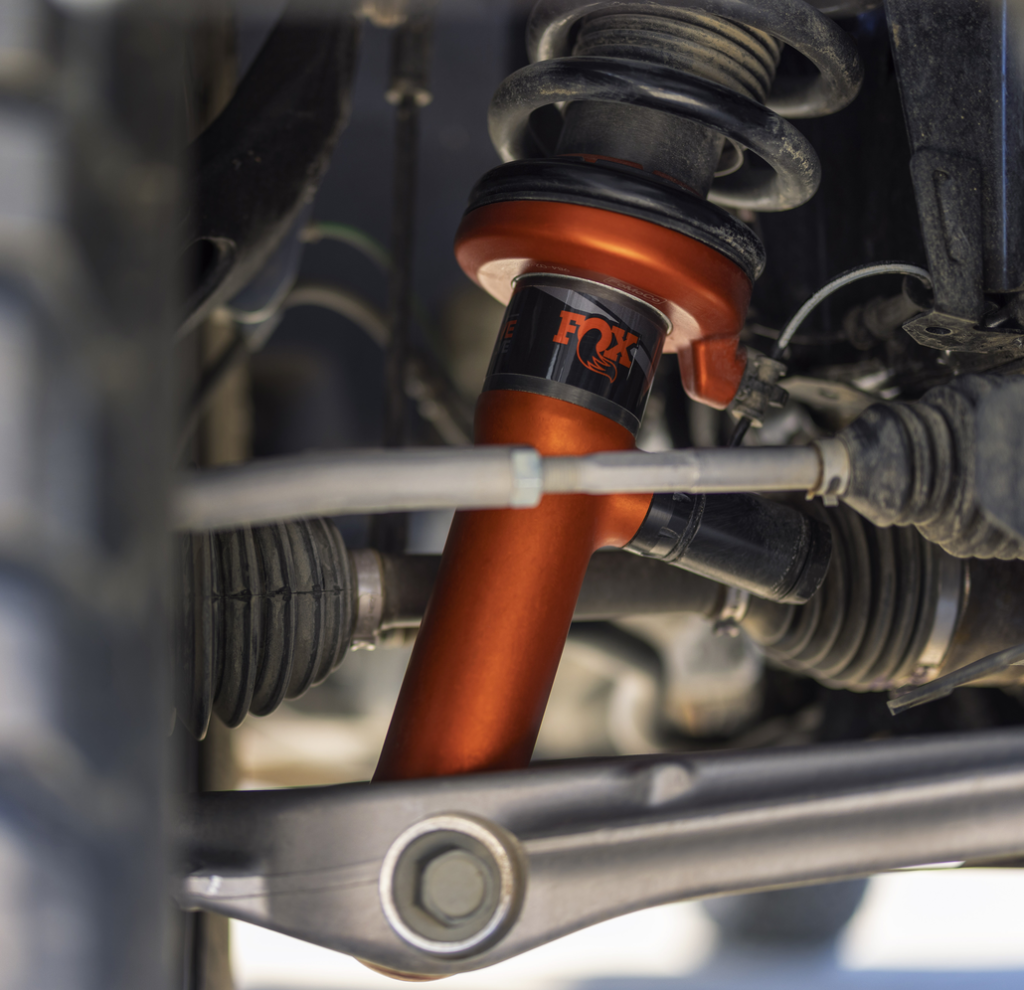
The truck rides on 33-inch BFGoodrich K03 All Terrain tires on 17-inch beadlock-capable wheels. The front suspension consists of forged aluminum double-A arms with 2.5-inch Fox® Live Valve Shocks in the front with a Watts-link rear suspension with trailing arms also fitted with Fox® Live Valve Shocks. The shocks feature external fluid reservoirs, each with an electronically adjustable internal bypass. There are no less than seven drive modes, with three for the pavement (Normal, Sport, and Slippery) and four for off-road (Sand, Rock Crawl, Mud/Ruts, Baja). Each mode adjusts engine response, transmission settings, ABS sensitivity and traction control calibrations, brake and steering feel, and even the instrument cluster arrangement.
Motor1 found the truck most at home in Baja Mode, the purpose of which is fast driving over rough terrain and is described by Ford as the Raptor’s most extreme mode for on-the-limit driving. “The suspension in Baja Mode cossets body motions enough to soak up dips and potholes without allowing excessive roll or float. The steering is heavy in Baja mode, but it’s precise and easily adjusted mid-slide, which gave me confidence the moment I flicked the Raptor’s rear end out.” They felt that this was the Raptor’s forte as opposed to slow rock crawling despite the dedicated driving mode for it.
The Raptor is not shy about promoting its capability. The two things that stand out in the front are the front skid plate and the grille, where the humble Ford blue oval has been replaced by “FORD” with nearly 10-inch-wide letters. The Raptor typeface extends half the bed length on each side. Bulging fender flares accommodate the 3.5 extra inches of track width.
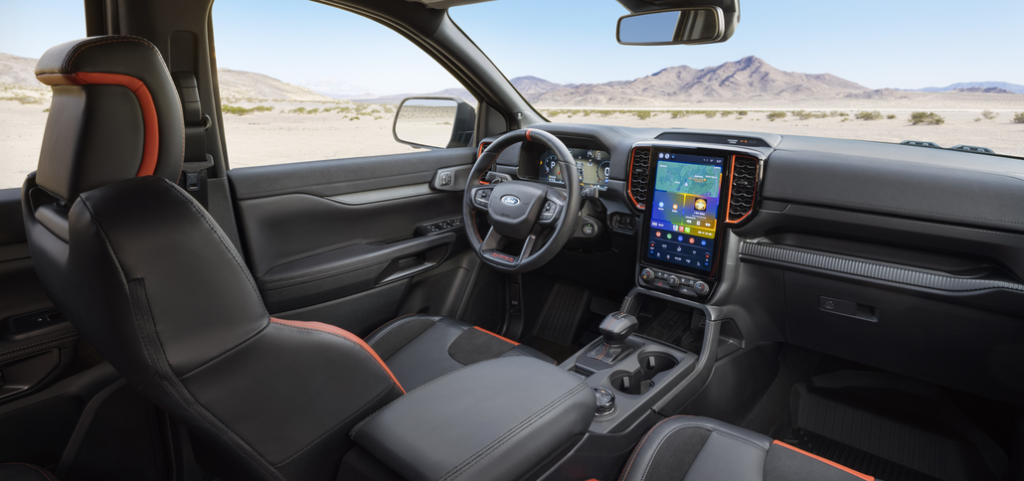
Inside, “Code Orange” trim appears throughout, including stitching and a bold centerline on the steering wheel. A big portrait-format 12-inch touch screen dominates the dash with an even larger 12.3 digital information center for the driver. Physical controls remain for the most common HVAC adjustments.
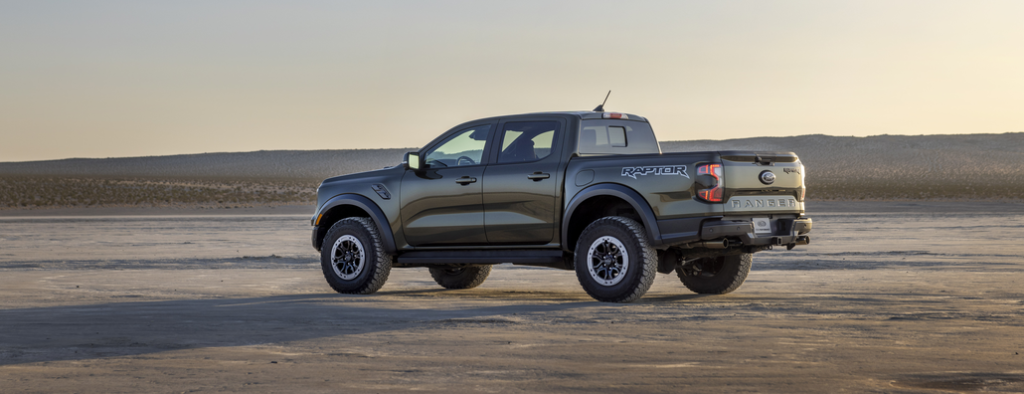
Motor1 points out how the tires and suspension do not exactly produce a quiet and luxurious ride on the highway. It is clear at all times what you bought this truck for. But they conclude with a reminder of its class-leading power plus: “It’s lacking in manners, but the Raptor is your best bet for taming the Wild West.”
All Raptors are specialty models that Benna Ford doesn’t always keep in stock. If none appear in our inventory, contact one of our sales professionals to have them bring in a model for your own driving impression.
Connect with us


