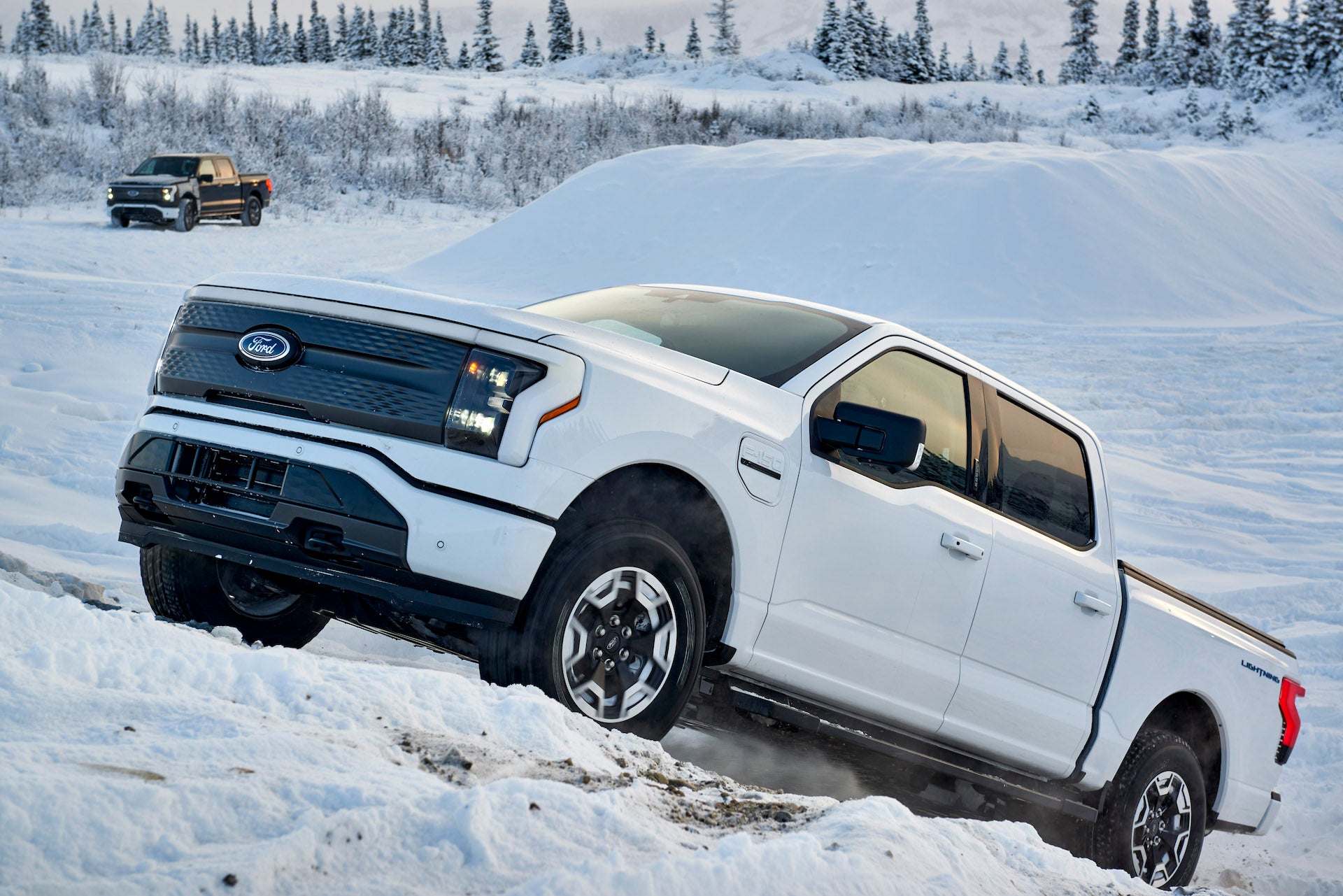
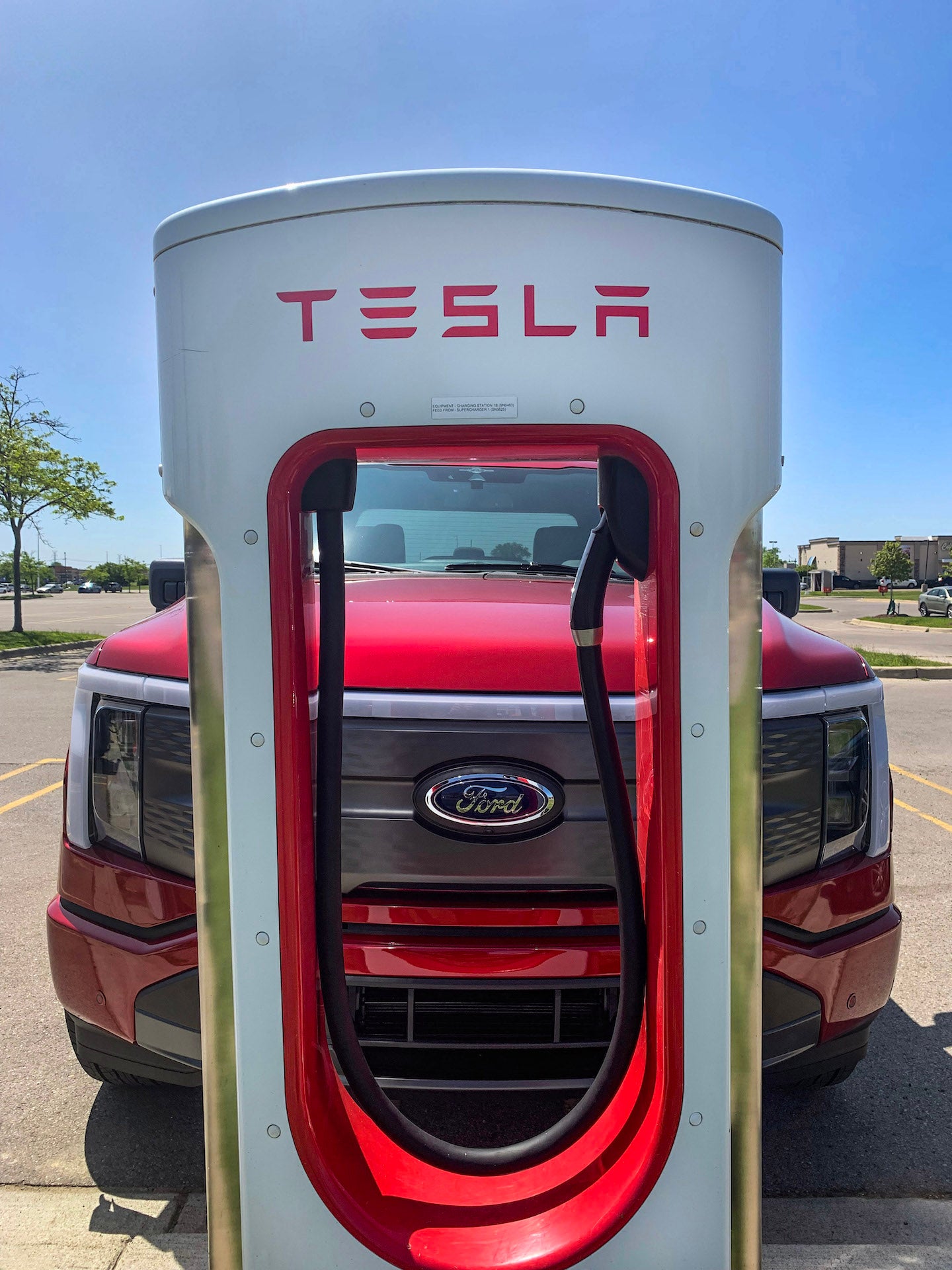
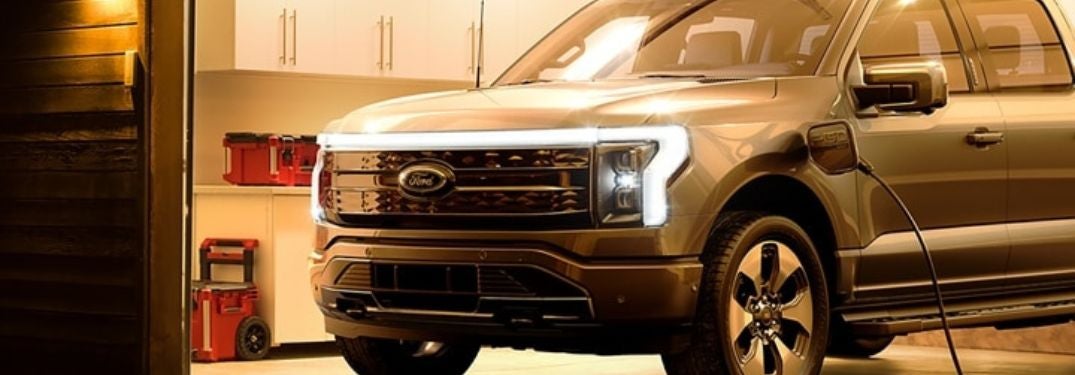
The award-winning F-150 Lightning, found at Benna Ford, is designed to adhere close to what has made the conventional F-150 the best-selling vehicle in America for about as long as anyone can remember. Still, it is clearly not for every F-150 user. If you regularly drive across states, it can be done in a Lighting, but it will require advanced planning on where you will recharge and what you will do while it charges. On the other hand, if you generally use your truck to drive to and around town or tow only short distances, such as to local worksites or a nearby lake, the F-150 Lighting could fit into your life. It may be a better option than a conventional F-150 for many good reasons. No Gas Stops and Greater Efficiency The best way to own an F-150 Lightning, or any EV for that matter, is to fully charge it at home. You come home for the day, plug it in, and the next day, it is fully ready to take you an estimated 230 or 320 miles (depending on your F-150 Lighting’s battery size). Again, if your driving is in and around town, you can drive all day without an interruption to refuel, the same for the next day, and so on. You will be doing it far more efficiently. Based on the EPA MPGe equation of 1 gallon = 33.7 kilowatt hours, the F-150 Lighting has a combined MPGe rating of 68, rising to 76 for city driving. This compares to the best conventional F-150 EPA rating of 21 combined and 19 in the city. Unfortunately, for every dollar you spend on gas, only about 20 cents goes to moving the vehicle. The rest of the energy is lost to heat and the mechanical drag of weight and friction. But for every dollar of electricity, 87 to 91 cents goes to moving the truck. So, no matter what gas prices versus electric rates are, the Lighting will give you more bang for your energy buck. No Drivetrain Maintenance Electric motors are far less complex than even the most straightforward internal combustion engine, and the engines in a modern F-150 are by no means simple. Each motor effectively has only one moving part, and there is no transmission because motors don’t need one. Thus, there are no filter or oil changes, spark or belt replacements, or tune-ups. Just every 20K to 30K miles, you will change the coolant. This also means there is very little that can break and need to be repaired. Of course, there is still non-drivetrain maintenance, like changing tires, wipers, and refilling washer fluid. There is no active battery maintenance either, but there are some guidelines to improve battery life. Fast Level-3 DC charging is fine for the occasional road trip, but it is best for battery endurance to charge only to 80%. Level-2 charging, such as at home, is best for extending battery life for day-to-day use. Also, extreme temperatures diminish battery effectiveness, so garaging the vehicle during the worst of winter is advisable. Better Performance Don’t drag race a F-150 Lighting unless you’re the one driving it. The base model churns out 452 horsepower, while extended-range models bump up to 580 horses. Both systems crank out 775 lb-ft of torque, which is on hand the moment the tachometer is a click above zero. According to Car and Driver, 0-60 is in 4.0 seconds, and the quarter mile comes in 12.7. Until recently, those would be exclusively supercar performance figures, which all happens with a whisper. In addition, the floor-mounted battery gives the truck a low center of gravity, even with 9.0 inches of ground clearance. This keeps the truck planted in the curves, further enhanced by the independent rear suspension. That suspension also keeps the ride smoother than in a conventional F-150. You also have the around-town convenience of one-pedal driving mode that lets your right foot accelerate and brake the vehicle with the accelerator pedal alone. Preproduction model with optional equipment driven under test conditions. Professional driver on closed course. Do not attempt. 2022 Ford F-150 Lightning production begins spring 2022. Tech and Features The base F-150 Lighting includes a 12.0-inch touchscreen infotainment system with Ford's latest Sync 4 software. This screen increases to 15.5 inches on the Lariat and Platinum models. Also standard across the model line are Apple CarPlay, Android Auto compatibility, in-dash navigation, and a Wi-Fi hotspot. You will also find heated seats and steering wheel, adaptive cruise control, and Pro Trailer Assist. When you take the truck out for an extended trip, you will have the Blue Cruise highway hands-free system and Ford’s exclusive "Intelligent Range," which evaluates the conditions under which it's being driven to give you a real-time estimate of your EV's driving range. It even has an on-board scale to help you distribute your payload from front to rear. To fully take advantage of the EV truck’s quiet operation, there are two available Bang & Olufsen premium audio systems: one with eight speakers in the Lariat and one with 18 speakers in the Platinum. A feature you won’t find on a standard F-150 is the front storage space. This locked 14 cubic feet of storage space where the engine would have been is perfect for keeping tools or anything else you want secure while leaving the bed and cabin space free. The F-150 Lightning’s bidirectional charging can power a standard-size home for three days during a power grid outage. It also brings plenty of power to any of its 11 power outlets for tools at the work site or electrical devices at the park or campsite. Emission Free The final top reason is probably the most obvious. The F-150 Lightning has no emissions. You will be doing your part in reducing your carbon footprint to preserve our current climate system for your children and grandchildren. This is even more effective if the electricity comes from your own solar panels (and thus free power) or a renewable source. Yet, with 100% of the electricity being coal-sourced, the carbon footprint of an F-150 Lightning is still less than its internal combustion counterpart because it is so much more efficient with the energy it uses. Again, the F-150 Lightning isn’t for every pickup truck owner, but it will fit in the lives of far more people than know it. If it seems like it may fit yours, Benna Ford keeps a wide selection, so pay us a visit and experience the F-150 Lightning, the first all electric full sized truck.


 Ben is an elementary school teacher who also worked in China for seven years. In addition to his wife and two pre-teen daughters, the family has fostered 13 children over the years and raises goats and chickens. Finding a big enough house and plot of land for their large family that was also affordable sent him 9,000 feet into the mountains to a home outside the electric grid. A previous Tesla owner and EV enthusiast, Ben set his sights on the F-150 Lightning from its first reveal and finally traded in his ICE vehicle for one in September 2023. He wishes he could have made the move sooner.“ the utility of the F-150 plus the benefits of the battery. Being off-grid in the Rockies is an extreme case for owning an EV, but we're maximizing it. We're absolutely loving it.”
 Obviously, Ben doesn’t charge his Lightning at home, but he can charge it at work. Since his round-trip commute is significantly shorter than the Lightning’s range, Ben has plenty of electricity from his truck to use at home.It isn’t the home’s sole source of electricity. The home is fitted with solar panels and an additional propane generator. Days can go by without sunlight or with snow covering the panels, and the propane generator is expensive to run and quite noisy in the otherwise silent mountain woods.Ben speaks of when one of his solar inverters failed. Using the Pro Power Onboard system, he was able to run the “refrigerator, microwave, coffee machine, all of our essential devices off the F-150 Lightning.”
 He is also a fan of the truck’s Zone Lighting. Deep in the woods, there are no street lamps, and Colorado can get dark early in the winter. The vehicle’s lighting helps him with the outdoor after-work chores that come with raising goats and chickens. He also uses the Pro Power Onboard system for various cordless electric tools, such as his electric snow blower and chainsaw. He has even used it to charge the kids' phones and devices before a significant snowfall.Ben Westby and family may not be typical EV owners, but they demonstrate how versatile the F-150 Lightning can be and that you don’t need to have the perfect setup to be a happy EV owner. If you think there is even a chance that the F-150 Lighting can become a companion in your life, come to Benna Ford, take one for a drive, and learn all of what Ford’s big, versatile EV can do for you.